
ACM Update 02-11-26
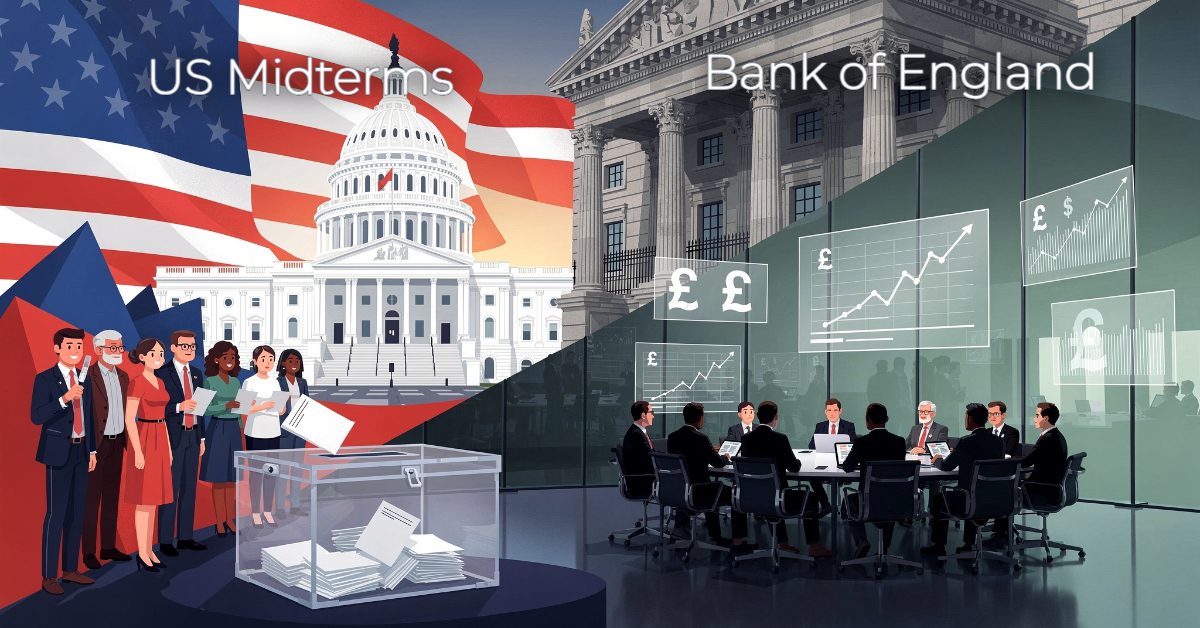
The Fed and ECB both held interest rates, whilst Christine Lagarde announced her upcoming departure. In the House of Commons, Chancellor Healey delivered a Budget which seemed to calm market nerves, delivering a boost to GBP.
This week is a big one for US politics, with the Midterms taking place on Tuesday. The Bank of England then look highly likely to raise interest rates on Thursday, before the latest Non-Farm Payrolls data lands on Friday.
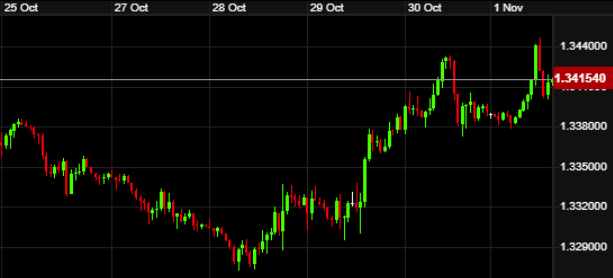
Amidst a week of central bank meetings in the US and Europe, it was GBP which made the most ground. Pre-Budget nerves gave way to relief, seeing the British currency gain in the latter part of the week. Sterling hit a 19-month high versus the Euro and a more modest six-week best versus the Dollar.
Starting off with the US Dollar, the currency saw choppy conditions last week. The Dollar Index (DXY) hovered either side of 102 in and around the Fed meeting. This was the main event of the week for the US and saw the committee opting, as expected, to keep interest rates on hold.
Hawkish undertones, however, did give the Dollar a brief bit of strength. Two dissenting policymakers voted for a hike, citing concerns about stubborn and sticky inflation. These were Trump-nemesis Lisa Cook and Beth Hammack.
Chairman Kevin Warsh continued his stance of refusing to provide explicit forward guidance. This gave the Dollar some support by leaving the door wide open for a possible December hike. Markets are currently pricing in a 25-basis point hike as an 80% probability for the final meeting of the year.
But the Dollar later fell slightly out of favour due to US 10-year Treasury yields dropping to a one-month low. This came off the back of the interest rate hold from the Fed.
Thursday’s US data showed a mixed picture of hot inflation and resilient growth. Advance GDP for Q3 was recorded as 3.4% (annualised). If accurate, this would be the best quarter for US growth for three years. It also reaffirms the belief that the US economy is still able to expand, even under the current position of higher interest rates and stubborn inflation. The Fed therefore have plenty of wriggle room for another rate hike.
Speaking of stubborn inflation, the latest Core PCE reading showed exactly that. September’s figures showed an annualised 3.6% worth of inflation, heavily driven by fuel prices. Weekly Unemployment claims meanwhile remain comfortably under the 200,000 level for the seventh week in a row. No doubt Donald Trump will have plenty to be happy with in the run-up to this week’s Midterms.
That same upcoming election did see some USD weakness later in the week though, where slight nervousness saw a moderate sell-off. But oil prices remaining elevated and a tense geopolitical situation in the Middle East are keeping the Dollar supported for now. Friday morning’s Binance cyber-attack led to a brief safe haven Dollar rally, which cooled towards the weekend.
Movements on GBP-USD can be seen in the chart below:
In the UK, the hype surrounding the Autumn Budget dominated the first half of the week. The buildup to John Healey’s maiden effort was full of nervousness and uncertainty, which has been the case since the infamous Truss-Kwarteng edition of 2022. This saw GBP lose slight ground.
But the post-Budget relief of a less shocking than expected fiscal plan meant the Pound bounced back. Healey managed to maintain fiscal headroom, keeping his £15bn buffer intact. Equally there were no major tax hikes, which would have had a detrimental effect on GBP. Is this just a placeholder Budget though, ahead of more sweeping changes next spring?
One other takeaway from the Budget was changes to OBR (Office for Budget Responsibility) forecasts. The UK growth forecast for 2027 was downgraded to just 1.0% from the 1.6% estimated previously. The body were also concerned about the cost of living, projecting peak inflation of 3.8% in Q1 2027.
As of late, the looming Bank of England rate decision has provided support to GBP. The recent hawkish pivot is expected to result in a quarter-point interest rate rise this Thursday lunchtime. The committee’s last gathering saw a 6-3 split in favour of a hold, but this time forecasts suggest a 7-2 for a hike, given the UK’s inflation position.
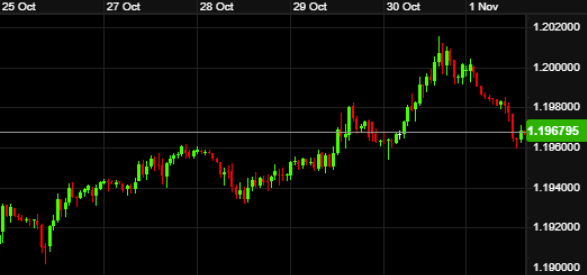
Economic data published recently has seen further GBP upside momentum. With house prices remaining flat in October and a stronger employment market, Sterling-Euro was able to breach 1.20 for the first time in since March 2025. Interest rates being held elsewhere also helped the Pound’s cause.
On which note, the ECB were one of the central banks meeting last week too. The Governing Council opted to hold all three of their key interest rates, in a widely expected move. Christine Lagarde downplayed inflation concerns but reaffirmed that the panel are “very attentive” to price growth.
The President stated that the direction of travel for ECB policy is “clear”, which analysts digested as interest rates nearing their peak. No promises were made for the December meeting however.
Arguably the biggest takeaway from the ECB gathering was the resignation of President Lagarde. She will step down on 7th February, well in advance of her 8-year term finishing in October 2027. There has been speculation Lagarde will take over as chair of the World Economic Forum, whilst she has also expressed a desire in the past to be more involved in domestic matters in her native France.
Some instability arises around the upcoming transition. Whilst Lagarde will remain at the helm for the December and February meetings, the surprise announcement does add a layer of political uncertainty to the Euro.
On the data front, recent inflation spikes remain a concern. Eurozone price growth hit 3.8% last month, with Spain hitting 4.9% for example, despite substantial Government subsidies on fuel. Core inflation for the bloc (which excludes energy and food) remains stable.
The brief crossing of 1.20 on Sterling-Euro last week can be seen in the chart below:
The week ahead:
Monday – EU/UK/US Manufacturing PMIs (08:15-15:00)
Tuesday – US Midterm Elections, RB Australia rate announcement (03:30), JOLTS Job Openings (15:00)
Wednesday – EU/UK/US Services PMIs (08:15-15:00), CPI Flash Estimate (10:00), ADP Non-Farm Employment (13:15)
Thursday – Bank of England rate announcement (12:00), ECB Lagarde speech (18:00)
Friday – EU Retail Sales (10:00), BoE Pill speech (12:15), Non-Farm Payrolls & Unemployment Rate (13:30)
The second half of a busy fortnight sees more policy decisions, as well as the Midterm elections and the latest employment data from the US.
From a pure economics perspective, Thursday lunchtime’s Bank of England interest rate decision is a standout. As already covered, this is highly likely to lead to a quarter-point rate rise from the Monetary Policy Committee with seven members expected to vote that way. This is based on recent narrative from the nine policymakers. Confidence levels are extremely high, with analysts seeing a circa 95% probability of a hike, which would be the first since August 2023.
From the US on the data front we have the latest on the jobs market. The week sees the usual JOLTS Job Openings figures on Tuesday, ADP Non-Farm on Wednesday and then the crescendo of Non-Farm Payrolls and Unemployment on Friday. A modest NFP figure of 63,000 is predicted, after and up and down few months.
Politically, the US Midterms take place. These mark the half-way point in Trump 2.0 and will determine which party controls the House and the Senate. These are significant as they will influence the ability to block or support the President’s legislative agenda, if required.
From the Iran war perspective, a Democratic win could see military operations restricted and thus tying Trump’s hands. This outcome is possible due to public fatigue over the war. If Republicans retain their majority, Trump can continue as he wishes and expectations are high for an immediate re-escalation in hostilities.
In the Eurozone, Retail Sales data and speeches from ECB policymakers take place. The latest on inflation in the form of October’s CPI flash estimate, is expected to show 4.0% when published on Wednesday.
Overall, this week could well see significant movements, especially for GBP-USD. For conversions related to this pair and others, make sure to get in touch with the Aston team to discuss currency strategies available.
Have a great week.
