
ACM Update 21-09-26
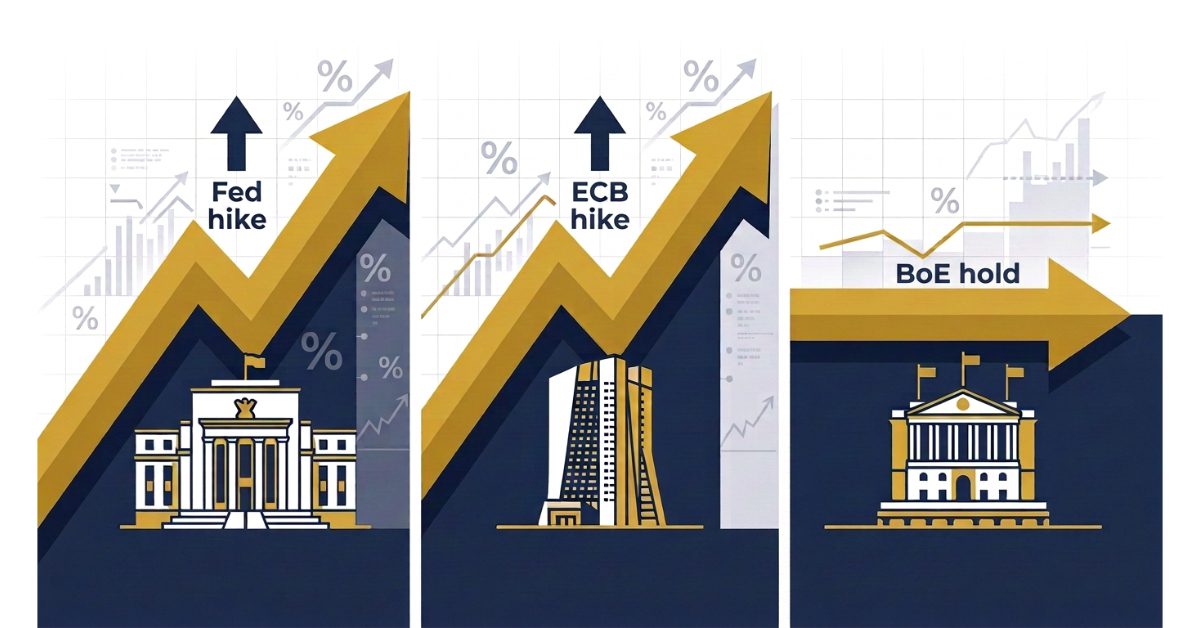
A hawkish hike from the Federal Reserve, but a hawkish hold from the Bank of England. What next for the major central banks as they all face a difficult battle against supply-side inflation?
A comparatively quieter few days ahead in terms of market events, with the highlights being speeches from Christine Lagarde and Andrew Bailey throughout the week. The Swiss National Bank have their quarterly policy decision on Thursday.
Central bank action in September has been plentiful, which continued last week. Decision-makers are facing considerable uncertainties, mainly stemming from the US-Iran war and the knock-on effects of this.
Starting off in the US, Wednesday evening’s announcement from the Federal Reserve delivered a widely expected hike in interest rates. The move was a unanimous 12-0 and marked the first interest rate hike from the Fed since July 2023.
Inflation remains sticky but resilient growth gave some breathing room for the policymakers. Recent metrics have shown price increases are ticking back up again, with Core PCE now back at 3.3%. This demonstrates further divergence from the Fed’s 2% inflation target, forcing action in terms of higher interest rates. The question remains though, with the current inflation being largely supply driven, will this have the desired effect?
As mentioned, growth remains promising if unspectacular in the US. The Fed also saw it fit to upgrade their GDP forecast for 2026 to 2.3%. This comes alongside a relatively stable unemployment rate of 4.1% and steady consumer spending. The hope is that the favourable economic picture can absorb the higher interest rates without too much trouble.
Last week’s hike was projected with a 93% probability, but what next though? The Fed’s updated dot plot of the future interest rate path showed 16 of 18 participants saw year-end interest rates sitting higher than their current level. This essentially signals (at least) one more rate hike to come from the late October and/or early December meetings.
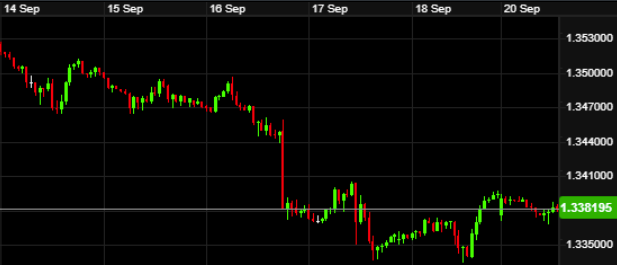
This “higher for longer” stance saw a strengthening of the USD, taking the Dollar Index (DXY) to a seven-week high of 100.4 in the process. The currency gained around 1% vs GBP during the week, as well as around a 0.5% gain vs the Euro.
Also driving the US Dollar was geopolitics. Renewed hostilities in the Middle East between the US, Iran & Houthi forces disrupted oil flows and saw prices surging once more to well over $100 per barrel. US Treasury yields crossed 5% at one point, giving the Dollar a further boost. A flight to safety amidst the geopolitics naturally boosted the greenback also.
The US currency also benefitted from other central bank actions. On the UK side, the Bank of England’s inaction (more to come on that) meant the Dollar was an attractive alternative. A rate hike from the Bank of Japan meanwhile was expected, however cautious messaging and a 7-2 vote split meant future rate hike expectations softened, again driving Dollar flows.
In the news, a Greenland “deal” was reached between the US & Denmark. Little was publicised as to the substance of it apart from a few classic Truth Social posts from the US President. The first meeting between new UK PM Andy Burnham and Donald Trump will take place this week at the UN General Assembly in New York.
Movements on GBP-USD last week can be seen in the chart below:
In the UK, the British Pound was mainly driven by what didn’t happen on Threadneedle Street. Admittedly, the Bank of England were not forecast to hike interest rates last week, which is precisely what materialised. The panel voted to keep rates unchanged at 3.75% for their sixth consecutive meeting, but with a hawkish undertone.
Breaking it down, the 6-3 vote split for a hold was also exactly what was expected. The three votes for a hike were from the same candidates as of late, with Huw Pill, Catherine Mann & Megan Greene all maintaining their stance.
But it was the inflation warning from the BoE that led to revised expectations ongoing. Their 2026 forecast for inflation was upped to 3.75% whilst 2027 is now expected to “exceed 4%”. Markets have now positioned themselves for a corresponding rate hike on 5th November when the next policy meeting takes place. There is almost certainly a Guy Fawkes/fireworks pun in that somewhere…
In line with market forecasts, headline UK CPI inflation rose by 3.1% in the year to August, up from 2.9% in July. This was primarily driven by a rise in petrol & diesel prices. Retail sales in August rose unexpectedly by 0.5%, which was enough to wipe out the negative of the same figure from the month before.
Jobs data showed the unemployment rate remained constant, but the overall number of roles fell by circa 26,000, leading to concerns about the labour market. Average earnings (wage growth) also softened to 3.9% as the reading edges closer to headline CPI.
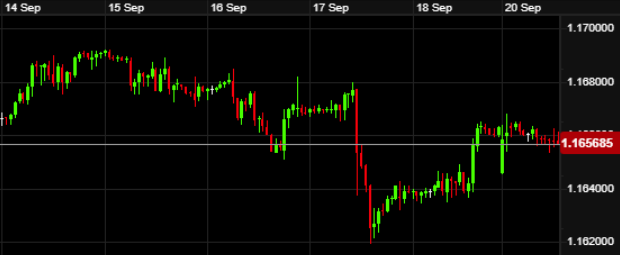
The Euro lost some ground last week, but primarily versus the US Dollar following the rate hike there. Despite the ECB’s own hike of the week before, the Dollar still maintains a yield advantage through higher rates, making it the more attractive proposition.
The increase in crude oil prices has also caused concern on the continent. With the bloc importing roughly 95% of its crude oil requirements, spiking prices caused further concerns about stagflation (low growth, high inflation). This is likely to remain a theme as the conflict in the Middle East ebbs and flows. Bond yields spiked here too, causing concerns around borrowing costs throughout the Eurozone.
A notable mention from the weekend is also the results of the German elections. With the leader of Germany’s federal coalition experiencing a historic defeat, further political uncertainty has emerged. Chancellor Friedrich Merz suffered a “disaster”, with the CDU achieving only 4.9% of the vote in Mecklenburg-Western Pomerania.
Whilst Merz has vowed to remain in office, far-right and far-left wins were driven by voter anxiety and may see a leadership challenge ongoing. Such a situation is unlikely to see the bloc’s biggest economy emerge from its multiple years of stagflation. Will it also lead to fractures across Europe?
Movements on GBP-EUR last week can be seen in the chart below:
The week ahead:
Monday – ECB Lagarde speech (16:00)
Tuesday – UK Govt Borrowing (07:00), ECB Nagel speech (09:30), ECB Lagarde speech (12:00)
Wednesday – EU/UK/US Services & Manufacturing PMIs (08:15-14:45)
Thursday – SNB rate announcement (08:30), ECB Economic Bulletin (09:00), BoE Dhingra (10:30) Breeden (14:30) Lombardelli (15:00) speeches
Friday – BoE Bailey speech (10:15)
Following the latest central bank meetings, the last full week of September will feel less congested in terms of major events. There will be a lot of focus on how markets will react to the recent divergence from the central banks. We have seen hikes from the Federal Reserve, European Central Bank and Bank of Japan, whilst the Bank of England held firm.
Of those, the Fed, ECB and BoE are all likely to produce a hike before the year is out, but any divergence from that sentiment could change the picture. We have speeches from Christine Lagarde and Andrew Bailey this week, who may or may not provide more colour as to upcoming policy. We also have a range of other Bank of England decision makers speaking on Thursday at various events.
Joachim Nagel of Germany’s Bundesbank also speaks on Tuesday morning. This is a routine event, but the timing could see him face difficult questions after the weekend’s elections.
Aside from that, the usual round of PMI data is released, displaying the performance of the Services and Manufacturing sectors across Europe, the UK and US.
For any pending requirements, do reach out to the Aston team. With the geopolitical environment looking more uncertain once again, protecting your FX risk is paramount.
Have a great week.
