
ACM Update 19-10-26
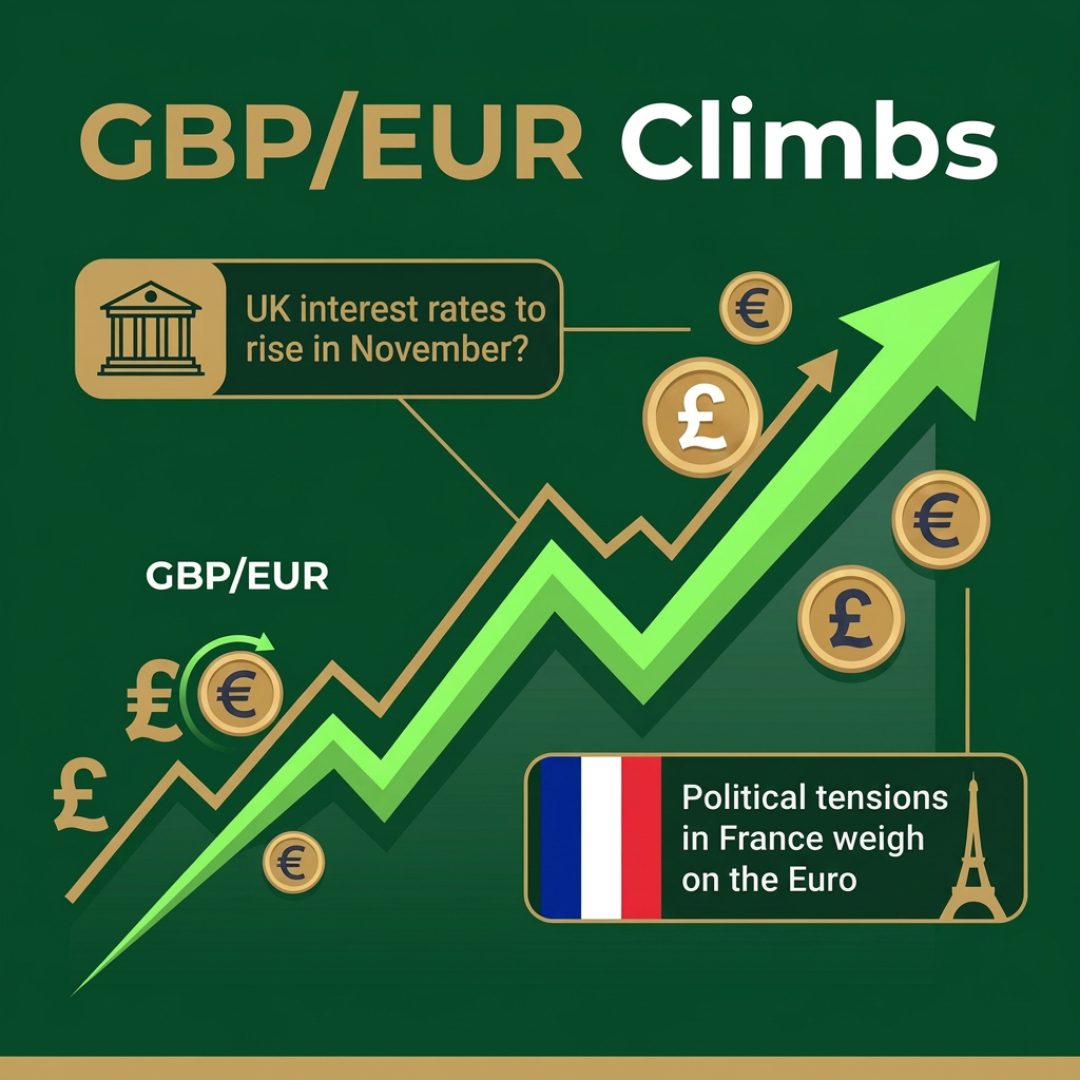
The US Dollar was a major mover last week, with hot inflation data followed by pivoting Fed narrative causing volatility. Bank of England commentary leant towards a likely hike in a couple of weeks, whilst in Europe political risks took centre stage.
UK data is in the spotlight this week with unemployment, wage growth, CPI inflation and retail sales all published. The Fed and ECB will be readying themselves for their upcoming policy meetings, both next week.
For the US Dollar it was very much a week of two halves, with strength followed by weakness. The former took GBP-USD to an 11-month low initially, before a two-cent swing back the other way.
The first part of the week was driven by the latest on US inflation in the form of CPI data. This showed that American prices accelerated in September at their fastest rate in five months of 3.7%. The figure came in marginally above the 3.6% markets expected, whilst notably up on the 3.4% of August.
The news comes in the same week as Donald Trump is negotiating to lift some Russian sanctions, in order to ease diesel prices. The President is under pressure to reduce US cost of living concerns as the country runs into the US Midterms.
Fuel prices were a major issue in the data, climbing by 9.1% on the month before and the biggest spike since the start of the US-Iran war. A separate survey showed inflation adjusted average earnings in the US fell last month for a sixth consecutive month.
Spiking inflation was heavily positive for the USD itself as it brought back to the table the possibility of a rate hike in next week’s meeting. Naturally this is the opposite of what the President wants the Federal Reserve to be doing, however his actions in the Middle East may leave the committee with little option. Admittedly, a hike may still have little impact on this supply-side driven inflation.
The hot inflation data saw the Dollar strengthen but this was soon eradicated overnight and then further weakness continued. This came mainly from Fed Chairman Kevin Warsh’s fireside chat at the IMF summit in Bangkok on Friday morning.
Despite the inflation data, Warsh refused to confirm any form of rate decision for next week’s meeting, instead indicating a move away from pre-announcing decisions. He also declined any specific trajectory on near-term interest rates, which took markets back to guessing mode, especially given he wasn’t the only Fed member taking this stance.
The move saw a Dollar sell-off throughout Friday, closing the week some 2% away from the lows seen after CPI. Markets rapidly revised expectations to circa 85% that the Fed will keep interest rates unchanged next week.
The USD also saw drops due to a sharp tech sell-off. Some reports suggested that growth from entities such as OpenAI were not as strong as expected. This in turn had an adverse impact on US yields.
With a cautious Fed and hot inflation strangling spending power for Americans, sentiment is now generally weaker on the Dollar than it has been for a while. GBP-USD eventually closed at a four-week best on Friday, as illustrated in the chart below:
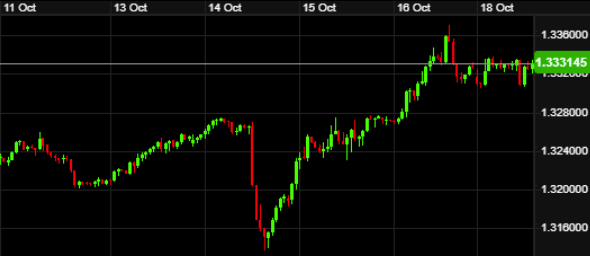
Sterling had a positive week, with a better economic outlook coupled with policymaker comments at the IMF meetings, both helping. In fact, the latest update from the IMF itself earlier in the week was generally positive for the UK, but with caution.
The latest IMF projections upwardly-revised the 2026 growth output for the UK economy to 1.3%, up from the 1% it had predicted in June. The UK is handling the Iran war better than expected, but also better than all other major economies. The control of debt and majority government in the UK (when compared to France and Germany for example) is making tax and policy changes more straightforward.
Next year’s outlook isn’t quite as pretty though, with a fractional downgrade to UK prospects. Overall, the British Chancellor was happy with the assessment and the 0.1% growth recorded in August, calling it a “sign of resilience”. The UK economy therefore grew 0.7% in the three months to August, according to ONS figures. This comes as Healey readies his first Budget, next week.
But it was mainly the Bank of England policymaker comments from events in Bangkok which drove the British currency, predominantly in the latter part of the week. A hawkish Megan Greene warned that waiting too long for rate hikes would risk being too late. Green has voted, unsuccessfully, for a hike in the last three meetings.
Andrew Bailey also made comments where he expressed frustration at sticky and elevated UK inflation. He too highlighted the resilience of the economy, but confirmed that interest rates may need to stay higher for longer. Will we see the Bank Governor move to a vote for a hike next week? It seems likely.
The “hike optimism” was thwarted slightly though as geopolitical tensions across the Middle East and elevated oil prices were more Dollar-positive. This did cap some GBP gains, however the currency gained against both the Euro and USD across the week.
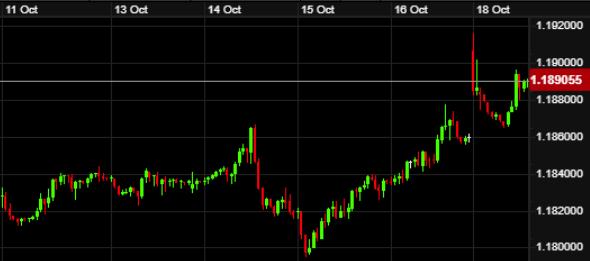
Once again, the Eurozone remains in the headlines. Inflation remains on the up, with 3.8% being recorded for September, up from 3.2% the month before. Again, this is predominantly driven by fuel price rises and with oil prices remaining elevated, there looks to be little respite on this front any time soon. This is suffocating economic growth across the bloc.
But the widespread protests across France have drawn the country strongly into focus. President Macron was forced into a national address last night, after a Saturday of riots and looting followed widely peaceful protests. Macron called for national unity, in a time where the country is struggling with massive debt, a cost-of-living crisis and also problems with the minority government.
The Euro was also dragged down by cost-of-living protests in Milan over the weekend, where PM Meloni has called for calm following rioting “hooligans”. Spanish protests related to renting/housing for now remain peaceful.
It comes as little surprise therefore that the IMF’s forecast for the Eurozone is a tepid 1.2% growth for 2026, reducing the attractiveness of the single currency. The continent is currently in a tough spot and needs the Iran war to end soon to help.
The Euro weakness combined with a positive week for GBP saw Sterling-Euro hit a 17-month high as markets opened for the new week, as illustrated in the chart below:
The week ahead:
Monday – Canada CPI Inflation (13:30)
Tuesday – UK Unemployment (07:00), GER & EU ZEW Economic Sentiment (10:00), BoE Greene speech (18:00)
Wednesday – UK CPI Inflation & Govt Borrowing (07:00), BoE Bailey speech (14:00)
Thursday – US Unemployment Claims (13:30), EU Consumer Confidence (15:00)
Friday – UK Retail Sales (07:00), EU/UK/US Manufacturing & Services PMI (08:15-14:45), US Consumer Sentiment & Inflation Expectations (15:00)
With the next round of central bank meetings beginning next week, this week is more about data. In reality, the vast majority of events this week are UK-focused, so we could see some movement for the British currency.
The batch kicks off with Unemployment and Average Earnings on Tuesday morning. Wage growth figures within this should still show a gradual slowdown, getting closer to headline inflation, easing BoE demand-driven woes. Government borrowing will be specifically of interest on Wednesday morning in the lead-up to next week’s Budget.
On the topic of inflation, the September figures follow on Wednesday also. These are projected to show another rise to 3.4% from August’s 3.1%, largely driven by fuel prices. This level or above is highly likely to concrete a Bank of England rate rise when the MPC meet at the start of November. Retail Sales figures are also published on Friday morning, offering the latest information on consumer spending.
Likely of most importance in the UK will be further speeches from Megan Greene and Andrew Bailey. As already covered, both spoke last week on monetary policy. Greene has long called for a rate hike, whilst further leaning that way from Governor Bailey could see markets heavily pricing in a rate hike on 5th November.
With a Federal Reserve meeting next Wednesday evening, the committee will now be in their blackout period with no commentary. Other releases from the US are limited to PMI data and the weekly unemployment figures, thus we can expect geopolitics and oil prices to be Dollar drivers.
Eurozone data is also quiet in the run-up to next Thursday’s ECB gathering. Markets will need to see a calming in domestic tensions in France and other major European nations, before any confidence is restored to the single currency. It will be interesting to see how things pan out this week.
With more volatility and market movement than we have seen for some time, planning your FX conversions and budgeting effectively are key. To remove risk from your exchanges, make sure to reach out to the Aston team to discuss the right solution for you.
Have a great week.
