
ACM Update 01-12-25

The UK Autumn Budget grabbed the headlines last week, both due to the delivery and substance within it. Financial markets determined the figures to be more positive than expected, seeing GBP gain ground versus other majors on Wednesday lunchtime.
In the US, further weak data was published as the Dollar fell back on Tuesday, especially versus the British pound. The latest ECB minutes reaffirmed that they remain “in a good place” in terms of monetary policy.
The start of December brings the usual monthly releases for November data. Jerome Powell and Christine Lagarde, as well as some Bank of England policymakers, hold speeches.
The long-awaited UK Budget was released on Wednesday lunchtime in the House of Commons… well almost. Comically, around 45 minutes before Rachel Reeves was due to take the stand, the full OBR (Office for Budget Responsibility) report was published online. Markets were therefore able to react to the contents of the Chancellor’s speech, before it was even delivered.
Whilst the 2025 Autumn Statement may well go down as leakier than a colander, markets did at least digest the information positively. Less of the widely feared tax rises and figures overall that were deemed as less dramatic than expected, saw GBP and UK financial markets gain ground on Wednesday. This came as a relief to many, with the infamous Liz Truss mini budget of 2022 still fresh in the memory.
OBR forecasts coming in better than expected, allowed Reeves to take less drastic action. UK growth is expected to be 1.5% in 2025, up from the 1% forecast in March. Next year however is projected as the same 1.5%, less than the 1.8% in March. Reeves is banking on these figures to restore fiscal headroom, but if they will indeed be accurate, only time will tell.
Other UK releases were minimal. Bank of England rate-setter Megan Greene spoke on Thursday, where she too referenced the Budget. Greene urged caution regarding suggestions that measures to cut energy bills would have a lasting impact on inflation. Her diagnosis was that this would create a one-off impact, so can be ignored in ongoing projections.
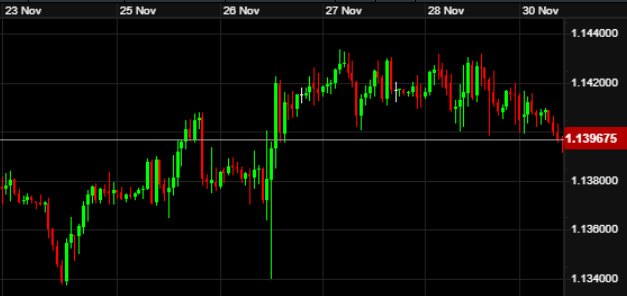
Overall, a more palatable Budget saw a better week for the pound. GBP hit four-week highs versus the Euro and US Dollar in the process. Movements on GBP-EUR can be seen in the chart below:
Over in Europe, the minutes from the latest ECB meeting were published. These continued the “good place” stance that the panel have been referring to for a while, in relation to inflation being close to target.
Divisions on inflation views from the committee members, however, have led to some divergence on thoughts for future rate moves. Some policymakers see inflation risks to the upside, some to the downside, creating what was referred to as a “lively debate”. The overall sentiment for the current picture was enough to keep interest rates at their current levels though.
Domestic activity was noted as remaining resilient also, despite external risks such as global trade barriers (tariffs) and geopolitical tensions. The debate on inflation has led markets to be slightly less certain on the future path of European interest rates. For now at least, the general view is for one further interest rate to come from the ECB in the first half of 2026. The December meeting, a week before Christmas, is thus expected as a firm hold.
There were a few November inflation releases from the EU’s major players to close out the week. German figures showed a monthly drop of -0.2%, meaning 2.3% on an annualised basis. French figures also produced a slight drop of -0.1% monthly. Spanish inflation recorded 3.0% year-on-year, a shade down on last month also.
In terms of data, Tuesday saw a range of publications from the US for the month of September. The delayed data from the shutdown continues to show weakness across the board. Retail sales for the month showed a small increase of 0.2%, well under market expectations and also the worst month on month change since May.
Other more recent data wasn’t looking pretty either. The October Federal Budget Balance figure (also delayed) for Government debt, saw a $284bn deficit recorded, worse than markets expected. Within this, customs duties (tariffs) posted an all-time monthly record revenue of $31.4 billion in the month.
Americans are growing increasingly nervous about the state of their economy it seems. The latest Consumer Confidence figures for November, displayed a sizeable drop in the reading. US citizens are therefore at their least confident since April, somewhat ironically the month that Trump’s global tariffs were rolled out. With further data to come soon, these releases will be key for the path of the world’s biggest economy, US interest rates, and indeed the Dollar itself.
The above nervousness was also portrayed in the Federal Reserve’s Beige Book publication. This was released on Wednesday evening and provides all the data that US policymakers have at their disposal for their next meeting, two weeks later.
The figures showed an overall weakening in the US jobs market, as businesses pause hiring and reduce employee hours. Softened consumer spending was both a cause and effect of the jobs market change, as price pressures on businesses continue to harm the wider economy. The Government shutdown was also referenced as impacting some consumer purchases.
Overall, the economic outlook remains unchanged, but there was reference to projections of slower activity in the months ahead. The manufacturing sector did however show reasons to be optimistic. This gave plenty for Fed policymakers and financial markets to digest over their Thanksgiving turkey.
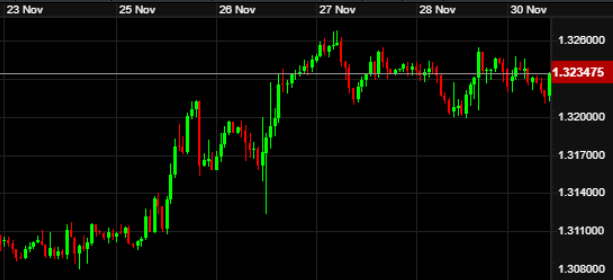
Movements on GBP-USD can be seen below. Notable fluctuations came from the Tuesday US releases and the UK Budget-related volatility on Thursday:
The week ahead:
Monday – EU/UK/CAN/US Maufacturing PMIs (08:15-15:00), UK Mortgage Approvals (09:30), BoE Dhingra speech (15:30)
Tuesday – Fed Powell speech (01:00), BoE Financial Stability Report (09:00), EU CPI Flash Estimate (10:00), Fed Bowman speech (15:00)
Wednesday – EU/UK/US Maufacturing PMIs (08:15-15:00), ADP Non-Farm Employment (13:15), ECB Lagarde speeches (13:30 & 15:30), BoE Mann speech (17:00)
Thursday – EU Retail Sales (10:00), US Challenger Job Cuts (12:30), US Unemployment Claims (13:30)
Friday – US Core PCE Inflation, UoM Consumer Sentiment & Inflation Expectations (15:00)
Into December we go then, which kicks off with the usual round of PMI data from the Services and Manufacturing sectors. These give an overall indication of performance as a snapshot. The Eurozone has a few data releases dotted throughout the week, with the latest on inflation and Retail Sales. The early estimate for November’s headline inflation is projected to show another 2.1% for the bloc, marginally above target. ECB President Lagarde also speaks on Wednesday in the European Parliament.
The first week of the month usually relates to US jobs news, but some of these releases are still delayed. Wednesday and Thursday still bring a snapshot with the ADP Non-Farm data, as well as the latest Challenger Job Cuts report. However, those awaiting the November Non-Farm Payrolls data will be looking a couple of weeks ahead until that is published.
There are plenty of other US releases though, as Core PCE inflation, more consumer sentiment numbers and inflation expectations arrive late on Friday. Federal Reserve Chairman Jerome Powell also speaks in the small hours of Tuesday at a Stanford University event.
UK data is limited to the aforementioned PMI releases and a scattering of speeches from Bank of England policymakers. Swati Dhingra and Catherine Mann speak during the week, both offering their own differing opinions on the path for interest rates.
After a better week for GBP last week, will markets continue to view the currency favourably, or is the honeymoon period already over for the Budget. Only time will tell. For any upcoming FX commitments, make sure to reach out to the team to discuss how to best protect your exposure, in more detail.
Have a great week.
