
ACM Update 24-08-26

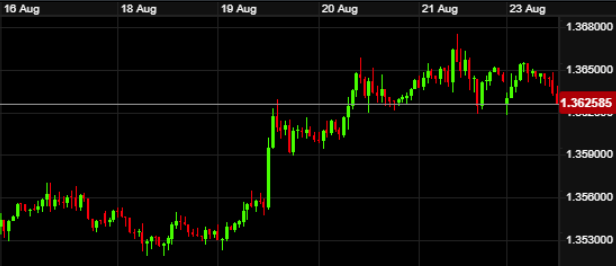
The Dollar Index saw further falls last week, pushing GBP-USD to a six-month high. Weakening macroeconomic data and thus a drop in Federal Reserve rate hike expectations didn’t help the US currency. In the UK, CPI inflation ticked up but was in line with forecasts.
The final week of August will bring further US inflation news in the form of Core PCE. The minutes of late July’s ECB meeting are published on Thursday, before Fed members gather for the annual Jackson Hole Symposium in Wyoming.
Another tough few days for the Dollar saw a fourth consecutive weekly set of gains for both the British Pound and Euro against the USD. Considering recent economic data, markets have been hastily unwinding bullish Dollar positions, which has seen the currency slump.
The Dollar Index (DXY) fell to a multi-month low last week at around the 98.56 level. Sterling-Dollar enjoyed a six-month high as a result, whilst EUR-USD marched to a three-month best.
Factors behind the Dollar move were numerous, but we shall start off with the publication of the Federal Reserve meeting minutes on Wednesday evening. These did contain evidence that some Fed policymakers wanted to immediately take interest rates higher, but data publications since the meeting have shown weakness. Inflation and payrolls releases for July have wiped out any committee optimism.
Notable also, there was no talk of cuts from the panel, which gave the Dollar a slight boost. Kevin Warsh was firm on the 2% inflation target, reassuring markets that this was not a soft target.
The new Chairman also put forward a proposal to reduce the number of Fed meetings a year to six, from eight. The thought behind this is to allow for more economic data to be gathered in between policy decisions.
Also putting the Dollar on the back foot was a mid-week announcement from the US Treasury Department, who expanded their long-dated bond buyback system. The theory was to calm a volatile bond market, but in doing so shorter-term yields were dragged down to a monthly low. This change meant the yield advantage that has been supporting the Dollar of late was eradicated.
The recent slump in US data is also not helping. Misses such as retail sales dropping -0.6% during July, as well as employment sector data slowing, continue to weigh heavily. With mid-term elections approaching, this isn’t the desired look that Trump is after.
In the background, US debt has now ticked over $40 trillion according to the latest Treasury figures. Ten years ago, that figure was circa $20 trillion. This puts the country (once again) perilously close to its debt ceiling, with significant further rises expected.
All of this, as well as the ongoing war in the Middle East is bad news for the US. Whilst the pause in hostilities with Iran seems to be continuing for now, which is good news, it is seeing a reduction in the safe haven appetite for the Dollar. Thus, the currency is losing ground slightly.
Four straight weeks of losses for the Dollar is not a good streak. President Trump seems oblivious to all this though, especially this weekend where he waved the green flag for the “Freedom250” Indycar race around the streets of Washington D.C.
Movements on GBP-USD can be seen in the chart below:
A hawkish Bank of England and robust recent data continue to support GBP. Sticky inflation was the concern of the three policymakers who voted for a hike last month and sticky inflation was exactly what emerged in the July figures.
The Consumer Price Index (CPI) nudged up to 2.9% in July from 2.6% in June, albeit in line with market expectations. This was the first acceleration in inflation since March and was mainly attributed to the 13% energy price cap increase at the start of the month. Naturally, this is linked to the US-Iran tensions. In positive news, food inflation slowed (not dropped) and transport cost inflation cooled.
Several data releases filtered through last week. Tuesday saw unemployment numbers, which remained at a constant rate of 4.9% versus expectations for a slight fall. Claimant count numbers did drop however whilst average earnings (wage growth) cooled slightly to 4.1%. This brings the reading closer to CPI inflation, making life more comfortable for the Bank of England.
Despite the recent resilient Q2 GDP data, July’s retail sales figures saw a monthly contraction of -0.5%. This publication on Friday morning did see the Pound lose some of its weekly gains, but better-than-expected Services PMI numbers later in the morning offered further support.
The intervention in the Bond market from the US Treasury was good news for GBP. This saw the selloff on the Dollar, with the Pound an attractive alternative given similar interest rate yields and renewed confidence in (most) recent data. All in all, another good week for the British currency.
Eurozone news was reasonably quiet, but the single currency also benefitted from the Dollar weakness. Especially so given the hawkish language of the recent ECB meeting, leading to expectations of another 25-basis point rate hike to come in September. Markets are currently pricing this in at above a 50% probability. The yield potential has helped the Euro.
Recent economic figures remain positive, if unspectacular. An August PMI survey showed the business environment expanding at the fastest rate this year, despite the geopolitical uncertainties.
Inflation figures were also confirmed as 2.9% in July, amidst ECB projections of higher to come. This is due to further increases expected in global energy prices because of the Iran war and reaffirms the position that the ECB cannot and will not be cutting interest rates any time soon. The latest consumer confidence figures meanwhile were still negative, but their “least bad” in six months. Every cloud…
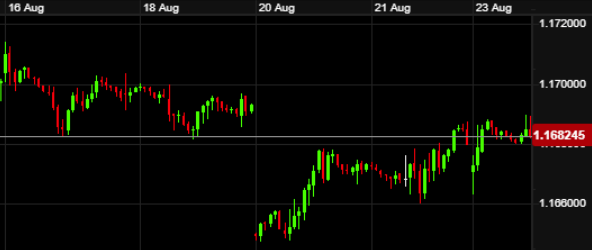
Sterling-Euro remained reasonably flat across the week, as per the chart below:
The week ahead:
Monday – Iran Sanctions speech – US Treasury
Tuesday – US Consumer Confidence (15:00)
Wednesday – US Core PCE Inflation & Prelim GDP (13:30)
Thursday – ECB Meeting Minutes (12:30), Jackson Hole Symposium Day 1
Friday – Jackson Hole Symposium Day 2, Fed Warsh speech & US Preliminary Payrolls Revision (15:00)
The majority of the market events for this week come from the US and take place from Wednesday onwards. The most significant is the annual economic gathering that is the Jackson Hole Symposium. The small Wyoming town hosts this Fed gathering, featuring a range of speeches from economists.
This year’s event will be the first with Kevin Warsh as Fed Chair. The event starts on Thursday, whilst Warsh delivers the keynote speech on Friday at 3pm UK time. Given his lack of forward guidance or hints on policy direction, this speech and any associated media questions may offer insights.
Wednesday features the July Core PCE Index reading also, which is the Fed’s chosen inflation reading. This is expected to remain at 3.3%, but a reading below this would concrete no rate hike from the committee for the foreseeable future. There is also the Payrolls revision on Friday, expected to be a downward revision of jobs added to the economy for the period to March 2026.
Thursday lunchtime will see the publication of the minutes of late July’s ECB meeting. This may provide the Euro with a boost if it backs up the likelihood of a rate hike to come in September.
To quote Bloomberg TV though “all roads point to Jackson Hole” this week. The event will be the headliner of the week and markets will eagerly await Kevin Warsh’s speech.
For any pending FX conversions, do get in touch with the Aston team to discuss measures to protect against currency exposure.
Have a great week.
