
ACM Update 22-06-26
A hawkish Warsh and seemingly postponed US-Iran peace talks saw further Dollar strength last week. In the UK, the Bank of England held interest rates after a downside inflation surprise in May. Further political instability returned after Andy Burnham’s by-election win paved the way for a Labour leadership contest.
The days ahead will see the ongoing peace talks as a focal point, whilst UK news this morning is dominated by Sir Keir Starmer’s resignation. US Core PCE inflation and GDP figures for Q1, are also published.
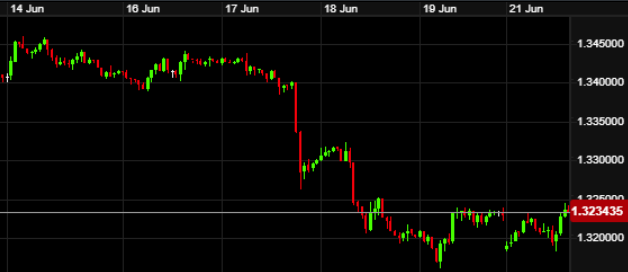
The US Dollar Index hit a one-year high last week as the currency was driven by both geopolitics and domestic monetary policy. The currency gained over 2% against both the British Pound and Euro during the week as a result.
For the first few days the geopolitical picture seemed to calm somewhat, so monetary policy was back as the main driver. Wednesday evening’s Federal Reserve announcement marked new Chair Kevin Warsh’s first meeting at the helm, which he began with a focus on “price stability”.
Despite the predicted lack of policy change for now, the Fed policymakers were split on how they see things for the remainder of the year. The latest predictions saw eighteen officials expecting at least one rate hike, with half of those expecting two. Warsh however declined to submit a forecast himself.
Also notable was the new Chair scaling back future market commentary in the form of forward guidance. The policy statement thus moved from the 341 words in Jerome Powell’s final meeting, to just 132 under the new leader. It also removed the voting information of respective policymakers and closed with the direct statement of “The Committee will deliver price stability”.
The new Chair’s message was unambiguously hawkish, focusing on fighting inflation in the short term. The narrative led to increased bets that rates will be increasing sooner than had previously been expected, providing considerable Dollar strength in the middle of the week.
Despite much fanfare of peace talks and Donald Trump signing an agreement at the G7 summit, the Geneva gathering for the Memorandum of Understanding between the US & Iran, was abruptly cancelled. This triggered concerns about a timely reopening of the Strait of Hormuz, as well as concerns about oil prices. The Dollar gained further as a result of renewed safe haven flows.
Domestic US data also helped the cause. Retail sales & home sales data were both well above estimates which compiled the Dollar strength before the Juneteenth US bank holiday on Friday. The Dollar had its best week since 2024 as a result of the above factors.
Recent movements on GBP-USD are in the chart below:
After a hawkish Fed meeting, the Bank of England equivalent less than eighteen hours later didn’t deliver as buoyant a tone. Whilst the BoE left interest rates at 3.75% again, the 7-2 split and underlying messaging was less hawkish than many anticipated. This led to very little by the way of gains for the British currency.
The committee were given a helping hand by May’s CPI inflation data, which unexpectedly saw price increases stay constant at 2.8%. The projection was for 3.0% with even higher figures forecast for later in the year. This lack of change was largely down to the pace of food price rises, which increased at their slowest rate in 17 months.
The inflation data took pressure off the Bank of England to raise interest rates. This combined with the expectation (at the time of the meeting) of the US-Iran peace deal, meant a less hawkish tone from policymakers, believing the inflationary effect of the war may have passed. The two outliers were Chief Economist, Huw Pill, and independent member Megan Greene, both of whom voted for an immediate 0.25% rate hike to control price rises.
Political uncertainty returned to the fray too, which did not help GBP on Friday. Andy Burnham’s victory in the much-anticipated Makerfield by-election, was sizeable. This paves the way for his leadership challenge following Starmer’s resignation this morning. The added uncertainty held GBP back during Friday trading.
One major positive for the week was UK retail sales figures. May saw a month-on-month jump of 1.2% following projections of a 0.5% increase. Strong customer demand was further boosted by a spell of warm weather in the month, helping spending. This balanced out the Downing Street instability fears, for one day at least.
With this week, specifically Tuesday 23rd June, marking ten years since the Brexit referendum, the topic naturally has popped back into UK news. A Bank of England report, published last week, stated the UK economy had taken a 6% hit from the effects of leaving the EU.
Moving on to the continent itself, the Euro was largely on the other side of the Dollar strength last week as it weakened somewhat. Early week sentiment with regards to the Middle East peace talks boosted the single currency, with oil prices falling further an additional boost.
When those talks stopped/paused later in the week though, the Euro saw some weakness. This was then compounded by the Dollar strength after the Federal Reserve meeting, which saw EUR-USD hitting a three-month low.
There were several ECB policymaker appearances last week. Those of significance built on the momentum of the ECB’s rate hike the previous Thursday. Bundesbank President, Joachim Nagel, warned that the committee are prepared to act again with further tightening of policy, if the inflation and energy outlook does not improve. This comes despite the bloc’s fragile growth position.
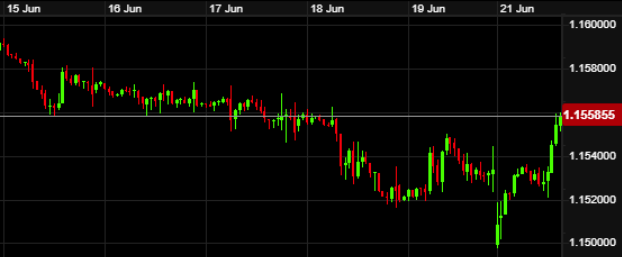
Overall, a relatively flat week on GBP-EUR, especially compared to the movement elsewhere. Movements are shown below:
The week ahead:
Monday – ECB Lagarde speeches (14:00 & 16:25), EU Consumer Confidence (15:00)
Tuesday – EU/UK/US Manufacturing & Services PMIs (08:15-14:45), BoE Breeden speech (09:55), BoE Taylor speech (14:15), BoE Dhingra speech (18:30)
Wednesday – AUS CPI Inflation (02:30), BoE Breeden speech (12:15), BoE Dhingra speech (16:00), BoE Pill speech (17:30)
Thursday – ECB Economic Bulletin (09:00), US Core PCE Inflation & Final Q1 GDP (13:30)
Friday – US UoM Consumer Sentiment & Inflation Expectations (15:00)
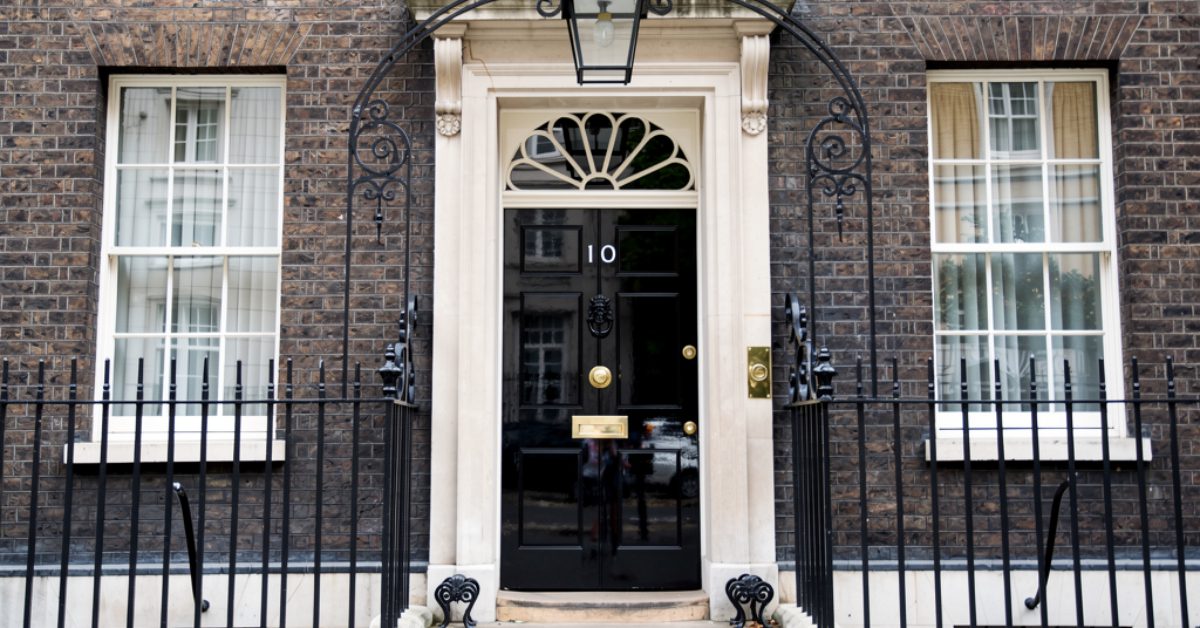
British politics and global geopolitics have started the week rapidly. This morning’s news has seen 10 Downing Street preparing for its seventh resident in the last decade, following Sir Keir Starmer’s 9:30am resignation. This has now triggered a leadership contest, which may take a few months to run to a conclusion according to Starmer, who remains in charge in the interim.
That leadership contest could be over before it has begun though as news has developed throughout the morning. Former Manchester mayor Andy Burnham has already been backed by what could have been his biggest rival, Wes Streeting. That news has provided some support to GBP given it may well lead to a quicker resolution to the current debacle.
Geopolitically the first round of US-Iran talks in Geneva have ended with “encouraging progress” according to mediators. This has produced a marginal Dollar weakening first thing, however markets now know better than to jump to conclusions given how many false dawns there have been on this topic. Oil prices though, have fallen again.
Aside from news headlines….. This week has several speeches from key central bankers. Many of these from Bank of England policymakers will be discussing two topics no doubt. Last week’s BoE interest rate hold is the first, with Huw Pill as one of those who wanted to hike rates speaking on Wednesday. The other discussion point will be ten years since the Brexit vote on 23rd June 2016.
US news is predominantly coming on Thursday and Friday, with the final Q1 GDP reading and the latest on the Fed’s preferred inflation metric of Core PCE. Consumer sentiment and inflation surveys from the University of Michigan are published on Friday.
For now, we can expect geopolitics and British politics to remain the focal points. This will likely remain the case for both until there is a resolution on a US-Iran deal and a resolution on the next Downing Street tenant.
Volatility will remain high on GBP-USD as a result of the above. Reach out to the team should you have any requirements to discuss on this pair.
Have a great week.
