
ACM Update 19-01-26

Geopolitics and tariffs are back in the spotlight, as Donald Trump’s Greenland plans continue to influence markets. The Dollar strengthened as a result, assisted by US inflation stabilising last month.
The central bankers of the world all rallied around Fed Chairman Jerome Powell, in his own legal battle versus Trump. In the UK, the latest GDP figures saw the economy grow unexpectedly in November.
This week sees the latest for UK GDP & Retail Sales, as well as US Final GDP numbers for Q3 last year. The World Economic Forum takes place in Davos, which is likely to see an icy reception for a certain US President, given others in attendance.
Safe-haven currencies including the US Dollar continued to benefit from the unstable geopolitical situation across the globe last week. Events surrounding Iran, Venezuela and Greenland have all seen investors seeking such currencies, driving their value.
News from within the US was just as important though. The week started off with the startling situation of the Federal Government taking legal action against Fed Chairman, Jerome Powell, in relation to building refurbishments within the establishment. This weakened the USD early in the week as nerves about Fed independence continued.
But Powell gained support from across the globe, as eleven other central bankers signed a letter to stand in solidarity with him. President Trump claimed no knowledge of the investigation, and news on the topic petered out during the week.
US inflation figures were released, where the CPI metric (consumer prices) came in at 2.7% for November, the same as October’s data. Food prices surged by 0.7% between the two months in their biggest gain since 2022, largely driven by increases in coffee and beef. Energy prices were also up slightly, leading producer prices (PPI) to spike too as a result.
American retail sales increased nicely in November, with a Thanksgiving spending spree boosting by 0.6% monthly. Better domestic spending and inflation remaining sticky at 2.7% should see the Federal Reserve hold interest rates next Wednesday (28th) at their current level. Markets currently price in a 95% likelihood for a rate hold, despite calls for cuts from Trump moles on the committee.
The pre-meeting Beige Book release produced little of note, suggesting a slight improvement in economic activity. Concerns about inflation and tariffs remain across the country, with signs that the latter may be beginning to filter through.
Wall Street seems to be feeling the pinch though, as a separate report showed workers at the biggest US banks are being slashed to help cost cutting. The figures from the big six of JP Morgan, Bank of America, Citigroup, Wells Fargo, Goldman Sachs & Morgan Stanley, saw a combined 10,600 employees down on the year before. This is the fastest dismissal rate in a decade.
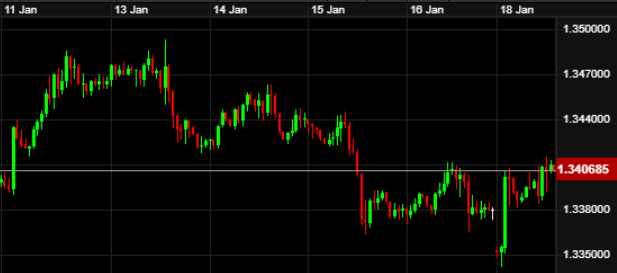
Events geopolitically along with US data drove GBP-USD, as per the chart below:
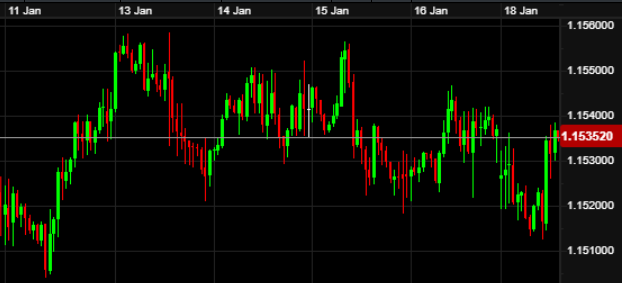
Sterling traded largely flat last week, especially against the Euro. The pair closed fractionally up though (0.2%), marking 5 consecutive weekly gains for GBP against the single currency.
The major UK release was November’s GDP data, which saw the economy grow by 0.3% in the month, surpassing the 0.1% expectation. This was largely driven by an increase in industrial output after a return to production at Jaguar Land Rover after the cyber-attack previously. Manufacturing production figures were up by 2.1% in the month, but car production remains below the pre-attack levels.
An additional factor was the uncertainty of the October Budget being in the rear-view mirror, providing reassurance to consumers and businesses alike. It is now likely the economy grew overall in Q4.
Three Monetary Policy Committee rate-setters spoke last week. These were Andrew Bailey, Dave Ramsden & Alan Taylor. Bailey used his speech to reaffirm the importance of central bank independence, off the back of the Jerome Powell situation, whilst Dave Ramsden’s speech contained little to influence markets.
Alan Taylor believes that the UK should hit the 2% inflation target by “mid-2026” and expects interest rates to “normalise” (flatten out) sooner rather than later. This maintains his position from recent meetings to keep rates on a downward path, thus caused little surprise. Taylor also believes US tariffs on China are inadvertently helping the UK, as cheaper exports are heading to the UK & Europe instead.
News over the weekend however from the US is likely to impact GBP short-term. President Trump’s plan to implement additional tariffs of 10% on eight countries who oppose his takeover of Greenland, includes the UK. These are due to come in (currently) on 1st February and have been labelled as “completely wrong” by UK PM Starmer.
In Europe, with little market data of note, movements were heavily influenced by geopolitics. With the Dollar benefitting as a safe haven, the Euro weakened on the other side of the scales throughout most of the week.
Monetary policy divergence though remains a factor between the two. The aforementioned US data last week has seen expectations that the ECB will be cutting interest rates again before the Fed does this year. Fed cuts look to now be off the cards until perhaps June, whilst a final European cut looks likely to be before that.
However, events in Greenland are now taking centre stage as the European nations are also in the list of those facing additional US tariffs. EU ambassadors arranged an emergency meeting yesterday on the topic, with suggestions that such a move would harm both Europe and the US.
Amidst all this, the latest ECB economic bulletin was published. This fractionally revised up European growth for the year, based on a resilient labour market and domestic demand. The inflation outlook is expected to remain constant at around 2.0%. This could all change though following recent events.
The slight upward move in GBP-EUR can be seen below:
The week ahead:
Monday – US BANK HOLIDAY, World Economic Forum Davos (ALL WEEK), EU Final CPI (10:00)
Tuesday – UK Unemployment (07:00), BoE Bailey speech (09:45)
Wednesday – UK CPI inflation (07:00), ECB Lagarde speeches (07:30 & 16:45), Trump speech (13:30)
Thursday – UK Borrowing (07:00), ECB minutes (12:30), US Final GDP Q3 & Core PCE (13:30)
Friday – BoJ rate announcement (03:00), UK Retail Sales (07:00), UK/EU/US Manufacturing & Services PMIs (08:15-14:45), BoE Greene speech (09:30), ECB Lagarde speech (10:00)
The week ahead then is likely to be dominated by three things. Greenland, Davos & UK data. This morning has already kicked off with a speech from UK PM Sir Keir Starmer, in which the urged “calm discussion” on the Greenland situation. This was in response to the threatened tariffs from Trump over the weekend.
Geopolitical events surrounding Greenland are likely to drive the US Dollar heavily. This is accentuated by the fact that today is a US bank holiday, plus the major Dollar for the week data doesn’t arrive until Friday lunchtime.
The annual World Economic Forum in Davos is likely to be a tense affair. The Swiss town will play host to multiple heads of state, economists and central bankers from around the world, all week. Many of those central bankers will speak, so there is the potential for insight on their respective monetary policies.
However, the Wednesday afternoon speech from Donald Trump could prove the most important. After a virtual appearance in 2025, just two days into Trump 2.0, we can expect an even more tense atmosphere in light of the Greenland and tariff environment. Wednesday at 13:30 GMT is when the President takes to the stage.
UK data events are numerous this week, thus could play a part in GBP direction. Tuesday to Friday at 7am sees the release of unemployment, CPI inflation, public sector net borrowing & retail sales figures respectively. The most significant should be UK inflation for December on Wednesday, expected to show a bounce back up in the reading during December, from 3.2% to 3.3%. If correct, that should seal UK interest rates staying on hold in the first meeting of the year, on 5th February.
With volatility expected to be high, we could see swings of over 1% this week across the major currencies. Both economic and geopolitical factors will combine to influence markets. Make sure to get in touch to protect any exposures and secure budgets.
Have a great week.
