
ACM Update 12-01-26

Amidst further global geopolitical uncertainty, the US Dollar benefitted from safe haven status and regained ground against the Pound and Euro last week. This came despite further weak US economic data on Friday from the December Non-Farm Payrolls.
Despite limited data, GBP continued a four-week streak of making weekly gains versus the Euro. The single currency suffered off the back of softer inflation figures.
US inflation, retail sales data and the latest economic outlook in the form of the Fed’s Beige Book, are all released this week. This comes as the White House takes legal action against Jerome Powell, which was announced over the weekend. UK GDP and the latest ECB Economic Bulletin arrive this side of the Atlantic.
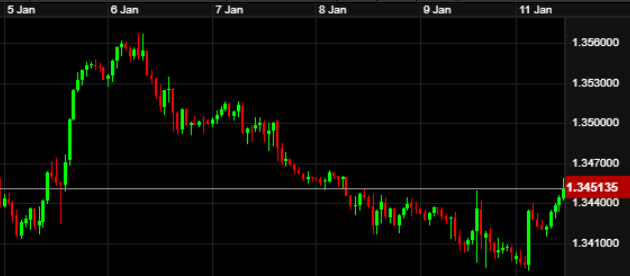
Following the previous weekend’s events in Venezuela, the Dollar bounced back from a 14-week low vs GBP in the early part of the week. Geopolitical concerns saw investors seeking safe haven assets, driving the Dollar back in favour. The greenback gained circa 1% against both sterling and Euro.
Despite this, US economic data published last week remained broadly weak. Monday started off with a 14-month low on performance readings from the US manufacturing sector, as the December PMI reading fell short of estimates. This was backed up the following day by the Services sector reading which, despite showing expansion, was the lowest growth since April.
Last week also produced the first “regular month” of US jobs data, since the shutdown got in the way of publishing figures. Again though, the collection of releases was far from buoyant.
These started off on Wednesday with another below estimate ADP Non-Farm release, followed by a tumbling JOLTS job openings publication. The release of November’s JOLTS data showed US jobs openings sliding to a 14-month low, further hinting at a cooling jobs market.
The simultaneous release of factory orders for November also showed a monthly drop of -1.3%. Lower vacancies and lower factory orders give further clues as to the state of employment.
This paved the way for the headline grabbing US Non-Farm Payrolls data on Friday. The release however wasn’t as much of a surprise this month, as Donald Trump essentially managed to leak it the day before…. In a Truth Social post on Thursday evening, the President bragged that private sector jobs had increased by 654,000 for the 2025 calendar year, a figure which include the yet to be published 50,000 jobs for December.
Regulations prohibit executive officials (of which Trump is one) on commenting on market data until 30 minutes after release. Trump taking a leaf out of the OBR/Rachel Reeves playbook it seems. The White House described the incident as an “inadvertent public disclosure” and advised it was “reviewing protocols”.
Regardless of the delivery, the Non-Farm Payrolls data meant the weakest year for job growth since 2003, excluding recession years. We also saw Unemployment data published, which produced a slight fall from 4.6% to 4.4%.
The statistics for the full year, interestingly showed a drop of 881,000 in the number of foreign-born workers in the US, and a drop of over 1.3 million since the peak in March. The Bureau for Labor Statistics directly attributed this to Trump’s immigration policies. Despite this policy designed to mean more jobs available for those born in the US, the unemployment rate for that sector has risen from 3.7% to 4.1% in the same period.
All in all, the weaker US data is pointing towards a longer pause in rate cuts from the Federal Reserve. The nervousness around the weaker data concreted this, strengthening the Dollar in the latter half of the week.
Most Federal reserve policymakers are in line with this, suggesting perhaps just one quarter-point interest rate cut for 2026. That is apart from Trump mole, Stephen Miran. He used a speech last week to advocate aggressive rate cuts, wanting 150 basis points of rate cuts this year. This echoes the President’s suggestion that only high interest rates are holding back the US economy.
Sterling-Dollar movements last week can be seen in the chart below:
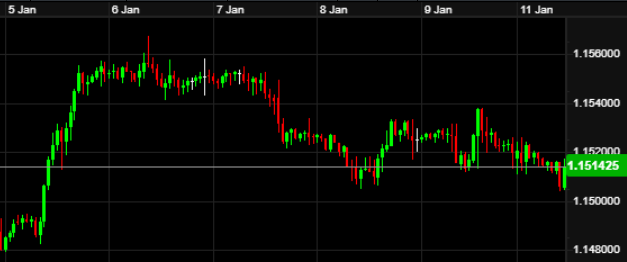
Sterling data releases meanwhile were very limited last week. GBP moved up early on Monday to a 10-week high against the Euro, before flattening out over the second half with very little to support it. All told though, sterling closed up on the week against the single currency for the fourth week in a row.
Hopes of the Bank of England continuing their gradual stance of rate cuts into 2026 have helped support the currency, but there was little of substance on that topic last week. The early week Services PMI release for January could be considered the main event, which itself fell below expectation. That said, the figure indicated expansion in the sector for the eighth consecutive month.
Aside from that reading, Construction output declined in December, but at a slower pace than feared. Mortgage approvals for November were slightly better than expected, and logically one would assume an uptick in December given the rate cut halfway through the month.
In Europe, again data was relatively thin, mixed in with a few bank holidays for Epiphany on Tuesday 6th. The latest inflation estimate for December was published, which shows the continent remains bang on target at 2.0% for the month. This dampened outlook for inflation suggests a softer stance from the ECB to come, thus interest rates will likely remain unchanged for the foreseeable.
The above meant some Euro weakness against the Dollar throughout the week, as the pair slipped back to the lowest in a month.
On a positive note, retail sales for the bloc nudged up by 0.2% in December. This marked the biggest monthly gain in the reading since July, despite not sounding spectacular. The PMI figures for the continent came in favourably at 52.4 demonstrating expansion. The Spanish figure performed best and also exceeded expectations at 57.1, a 12-month high.
Last week’s changes on GBP-EUR can be seen below:
The week ahead:
Monday – Fed Barkin speech (17:45), Fed Williams speech (23:00)
Tuesday – US CPI inflation (13:30), Federal Budget Balance (19:00)
Wednesday – BoE Taylor speech (08:00), US Retail Sales & PPI inflation (13:30), Fed Miran speech (15:00), BoE Ramsden speech (15:30), Fed Beige Book (19:00)
Thursday – UK GDP (07:00), ECB Economic Bulletin (09:00), US Unemployment Claims (13:30)
Friday – Fed Jefferson speech (20:30)
Onto this week then and on the face of it a quiet start to the week. That was before the Federal prosecutors in the US have opened up a criminal investigation into the Fed Chairman, Jerome Powell. The action relates to comments he made on renovations to Federal Reserve buildings. The Fed Chairman meanwhile believes this relates more to Trump’s anger at the Fed not cutting interest rates as quickly as he wanted last year.
Either way, the feud is another example of the US administration’s involvement in the previously independent Federal Reserve. The Dollar has weakened off this morning as a result. Trump’s comments last night on the matter? – “I don’t know anything about it, but he’s certainly not very good at the Fed, and he’s not very good at building buildings”.
Onto more regular economic news, a further raft of US data is published this week. US CPI inflation is the big one to come on Tuesday lunchtime, projected to remain at 2.7% for a second month. This is followed by the latest on the ever-expanding Federal budget balance, later in the evening.
Other significant US releases are retail sales, PPI inflation and the publication of the Beige Book document. This signals two weeks until the next Fed meeting, but also contains all of the data policymakers use to reach their decision.
UK GDP data for November is the only significant domestic release. This is projected to show a “growth” of 0.0% for the month and being the only UK yardstick, will likely drive GBP movement when published on Thursday morning. Speeches from Bank of England members Alan Taylor and Dave Ramsden take place on Wednesday.
In the Eurozone, little of note. The ECB’s latest Economic Bulletin is published on Thursday morning.
Given all of the geopolitics at play currently, movements are likely to be volatile. The Dollar especially could be vulnerable to rapid changes this week. This is even more of a reason to ensure the Aston team are up to date on your pending requirements. Do reach out with any queries or to discuss your needs.
Have a great week.
