
ACM Update 14-09-26
As geopolitical tensions rose once again in the Middle East and US inflation remained sticky in August, the Dollar regained ground. In Europe, the ECB delivered a widely expected rate hike.
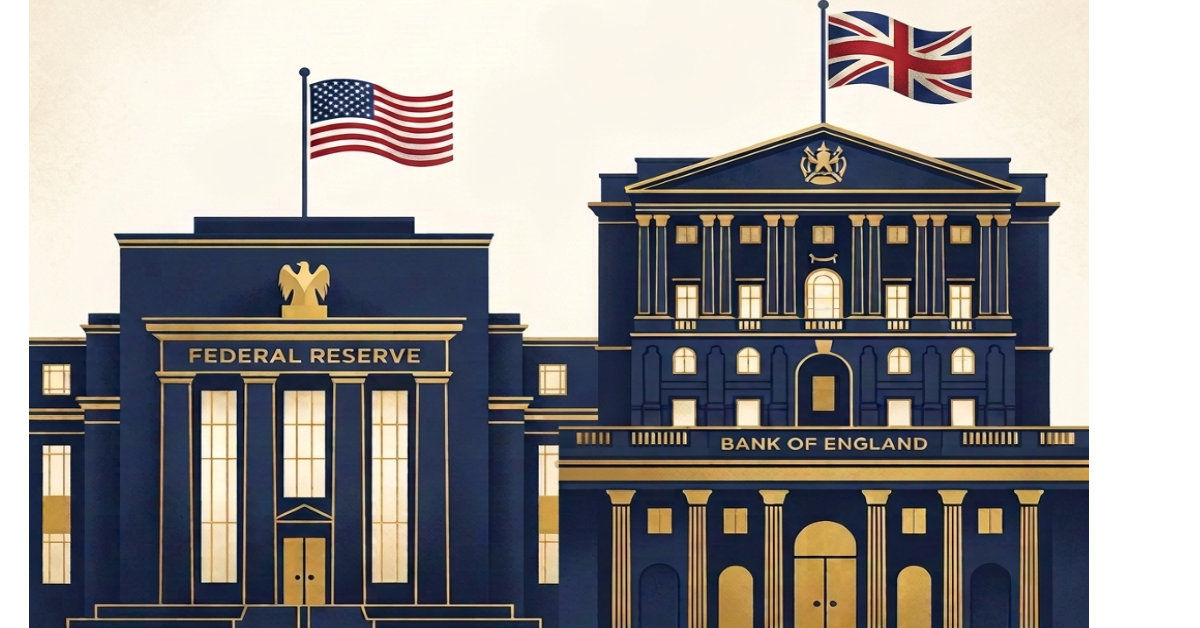
This Wednesday and Thursday see interest rate announcements from the Federal Reserve and Bank of England respectively. The former looks highly likely to raise rates, whilst the BoE may be edging further that way. UK retail sales, unemployment and inflation are all published during the week to assist in decision making.
Despite a four-day week in the US following last Monday’s Labor Day bank holiday, there were plenty of Dollar-driving factors to choose from. Sticky inflation, oil prices spiking, treasury yields doing the same, plus increased expectations of a rate hike this week all drove the US currency.
Beginning with inflation, Friday saw the publication of the latest US CPI data for August. This showed the metric remaining at 3.4% year-on-year, as well as an acceleration in the monthly change. The consumer price data followed the equivalent producer prices (PPI) release earlier in the week which came in hotter than expected at 5.4%.
The PPI was largely driven by recent energy price hikes in the US, again related to the Iran war. With consumer prices already running high, there is concern that higher producer prices will bleed through to end customers, pushing costs higher.
All of this points to the fact that the Federal Reserve has plenty to do on the topic of taming inflation. That work is likely to have to start this week as the panel meets for their latest policy discussion. Recent data as well as a more hawkish sentiment from Kevin Warsh, now put the chance of a September hike at 85-90%. This offers considerable support to the greenback.
Also driving the Dollar was a further escalation in the Middle East. As the US & Iran traded fire again, the conflict appeared to spread across the region as Houthi forces attacked Saudi pipelines. Markets moved into risk-averse mode, which saw the Dollar become more attractive as a safe haven.
As a consequence of the above geopolitical events, oil prices spiked from circa $95 to $111 a barrel in the week. US Treasury yields were also on the rise driven by inflation concerns, leading to further Dollar attractiveness.
Attention now shifts to a pivotal Fed meeting on Wednesday. Kevin Warsh was brought in by Trump to bring interest rates down, but the Fed Chairman seems to have little choice but to lead his committee to hike rates. How will inflation react and how will Trump react?
Movements on GBP-USD last week can be seen in the chart below:
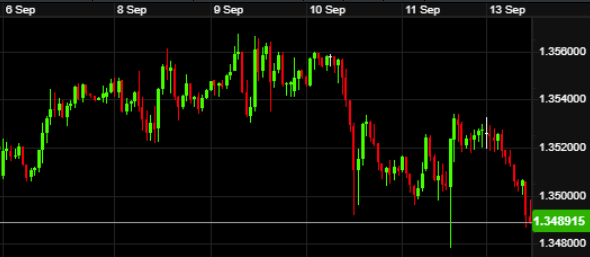
Despite the mentioned USD strength, the British Pound saw a better week than of late. Friday saw the publication of the latest GDP data which posted an upside surprise of 0.4% growth in the month (versus 0.0% forecast). This follows the 0.3% uptick seen in June.
According to the ONS figures, there was an increase in AI-related businesses spending which boosted the sector. Other factors included the improved spell of UK weather combined with the latter stages of the World Cup, contributing to consumer spending. Overall, the three months to July saw a 0.4% growth when compared to the previous three months.
Another GBP-positive factor was market-driven bets for interest rate hikes to come in the UK. Whilst there seems widespread agreement that no policy change will come of this Thursday’s Bank meeting, financial markets are pricing in at least two rate hikes in the UK for early 2027. This comes from the recent spike in oil prices as well as an economy which is still able to deliver growth, despite headwinds.
In addition, concerns eased in relation to the fiscal risk the UK economy is facing. The recent Labour leadership fiasco had cast concerns on whether the new PM and Chancellor would be able to control spending and thus maintain headroom in their Budget. These have subsided for now, although that may be temporary. Inflationary concerns relating to events in the Middle East could rapidly change the narrative.
On the continent we saw an expected rate hike from the ECB. The move took European interest rates to their highest since 2011 and into the upper end of a range which economists consider as “policy neutral”.
Over the summer, the September policy meeting looked more likely to be a pause/hold. However, the recent re-escalations in the Middle East and oil prices rising sharply have combined to force ECB action. Any further energy cost rises across Europe run the risk of strangling the respective economies.
By way of demonstrating this, Eurozone inflation jumped to 3.3% in August which was heavily driven by a 14.3% spike in energy costs. The ECB maintained their 2026 inflation forecast at 3.0% for now, but raised 2027 & 2028 forecasts to 2.5% & 2.1% respectively. This tells markets that inflation will remain above target for much longer than previously hoped, implying higher interest rates for the foreseeable.
The panel were able to hike rates thanks to the current resilience of the Eurozone economy. Growth forecasts were in fact upgraded to 0.9% for this year and 1.4% for 2027. Much of this comes from increased government spending both in defence and infrastructure, alongside AI-related investments.
Christine Lagarde used her usual Copy-Paste press conference of the panel taking a “data-dependent, meeting by meeting approach” to future policy decisions. However, a fellow ECB decision maker has already warned that further tightening may be required to avoid higher energy costs filtering through to end users. Markets are already pricing in another rate hike in Europe by the end of the year.
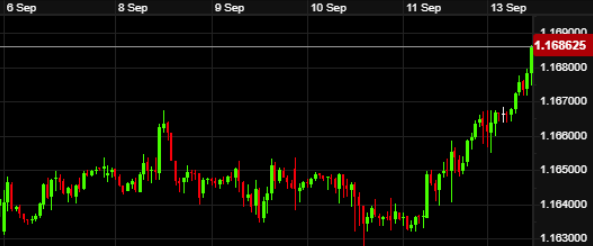
Last week’s GBP-EUR movements can be seen below:
The week ahead:
Monday – ECB Lagarde speech (16:15)
Tuesday – UK Unemployment/Claimant Count/Average Earnings (07:00), EU & GER ZEW Economic Sentiment (10:00)
Wednesday – UK CPI Inflation (07:00), US Retail Sales (13:30), Fed Rate Announcement (19:00) & Press Conference (19:30)
Thursday – EU Final CPI Inflation (10:00), BoE Rate Announcement (12:00), US Unemployment Claims (13:30)
Friday – BoJ rate announcement (03:00), UK Retail Sales (07:00), ECB Lagarde speech (11:30)
Into a busy week of central bank meetings we go, with the Federal Reserve, Bank of England and Bank of Japan all announcing policy decisions.
Wednesday evening (19:00 UK time) will likely see the Federal Reserve opt for their first interest hike in 38 months. A quarter-point hike is widely forecast as mentioned, with a crucial press conference to come afterwards from Kevin Warsh. Recent narrative suggests markets are likely to be kept guessing as to what his policy stance going forwards will be, so we can expect volatility.
UK data is plentiful this week. Unemployment and retail sales releases will give an idea as to how resilient the UK economy remains, despite challenging conditions. Wednesday morning’s inflation data is projected to show an uptick in August, taking the reading from 2.9% to 3.1%. If accurate, this would be the highest CPI reading since March at the beginning of the US-Iran war.
All of these will lead into Thursday lunchtime’s Bank of England meeting. This should see UK interest rates held at their current 3.75% by a vote split of 3-0-6 (hike-cut-hold). Any deviation from the forecast of August’s inflation reading though, may see a rapid revising of market expectations. The middle of the week could well be busy for GBP as a result.
In Europe, there is little of note as we digest the ECB meeting from last week. August CPI is expected to be confirmed as 3.3% on Thursday morning, whilst ECB President Christine Lagarde rounds off the week with a press conference at the ECOFIN meetings in Dublin.
Given the significant events spread across the latter half of the week, for any pending FX requirements, make sure to speak to the Aston team for more information on removing market risk.
Have a great week.
