
ACM Update 01-09-26
With a quieter week to round out August, all eyes were on Friday afternoon’s Jackson Hole Symposium. Fed Chair Warsh delivered a speech that left Wall Street still guessing as to his policy desires ongoing. Also from the US, Core PCE data was hotter than expected.
Following yesterday’s UK bank holiday, there is plenty squeezed into this four-day week. Eurozone inflation, an Andrew Bailey speech, the latest releases from the Manufacturing & Services sectors globally, as well as the much-anticipated August jobs data from the US, all make appearances.
“Call it a trail map, not forward guidance” was a great takeaway comment from last week’s Jackson Hole event. Naturally, this came from Federal Reserve Chairman, Kevin Warsh, as he delivered his debut speech from the town in the Wyoming wilderness.
Given the lack of forward guidance offered by Warsh in policy decisions, markets had hoped for more clarity as he stood up to the podium on Friday afternoon. But the new Chair remained committed to his “quieter Federal Reserve” policy, where he is “committed to discipline, not to a decision”. This irritated Wall Street and left them in the dark.
Some analysts did note a lean towards a hawkish tone from Warsh though. This mainly came from his dismissal of recent inflation data as “insufficient” to suggest the reading is on the way down towards target. Similar to the UK’s Huw Pill a few weeks ago, Warsh pointed out that inflation has been above the 2% target for 65 months in a row now.
This felt like an urgent call for higher interest rates, and at the time offered a slight boost to the Dollar. His comments that the Fed “still has work to do” also leant the same way. What will President Trump think of the likelihood of higher rates, against his repeated demands for the opposite? Who knows.
Earlier in the week, the Fed’s preferred inflation reading of Core PCE climbed higher. The monthly rise was 0.2% and annually 3.7%, which was ahead of estimates. This points to further US inflation pressure and supports market sentiment and the Warsh narrative for hikes.
Geopolitics were also at play for the Dollar. Renewed tensions between the US and Iran saw oil prices swing wildly over the week. North of the border, trade tensions were causing damage. Retaliatory tariffs from Canada followed by Lake Ontario being “renamed” to Lake America by Trump on Friday made for a bizarre week.
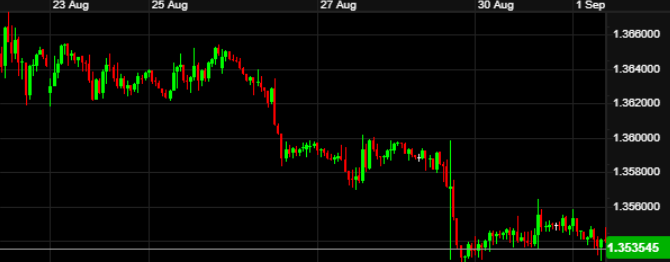
The Warsh speech led to a slight rebound in the Dollar Index, but overall it was just a modest weekly gain for the USD versus GBP. Movements on the pair can be seen in the chart below:
Sterling itself was little moved during the week, if anything softening a fraction. The main driver was falling expectations for interest rate hikes to come this year from the Bank of England. With the economy growing and inflation yet to truly spike, markets have now pushed back their timelines for a hike into early 2027. The September meeting now sees just a 15% chance of a 25-basis point rise.
The talk of hikes being further down the line came from reduced inflation expectations, stemming from softening oil prices in the latter part of the week. With the BoE’s current positioning being very much linked to energy-driven inflation, any falls of this nature will be impacting GBP harder than some other major currencies.
UK data remains mixed at best, with many of this month’s releases underperforming. The alarming fall in retail sales in July was far from good news, as was the £1.8bn budget deficit for the same month. A survey from Lloyds showed business confidence was at a 5-month high meanwhile, but a YouGov survey saw UK inflation expectations up to 3.9% ongoing.
With Parliament resuming this week, all eyes will be on the lead-up to the Autumn Budget. Public policies and elevated debt will be under the microscope even before 28th October, which may limit GBP momentum.
The Euro enjoyed a stable week, supported by rhetoric from the most recent ECB meeting. The minutes of this were published on Thursday, displaying a further hawkish narrative. In these, ECB Executive Board Member Isabel Schnabel stated that current borrowing costs are “insufficient” to get inflation back to target.
Her comments, along with others in the publication, reinforced expectations for a 25-basis point rate hike at their next meeting on 10th September. Financial markets now have this at a 96% probability.
The single currency was also supported by upward-pointing economic sentiment figures. The main indicator jumped to 98.4 in August, which was unexpected, above target and the highest in seven months.
Looking at individual member states, there was more of a mixed bag. German GDP numbers, whilst modest, were above expectation for Q2 and business climate data was better than expected. French data showed zero economic growth in Q2 whilst inflation remains high. Spanish inflation for July also showed a jump from 3.6% the month before to 4.3%.
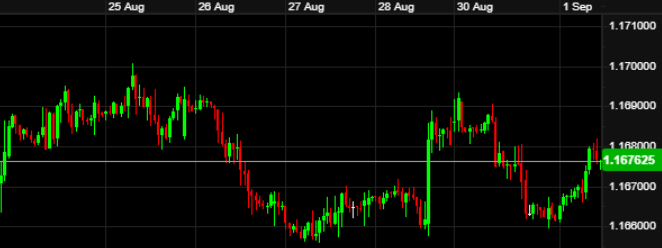
The country-specific data seems to concrete the likelihood of a rate hike next week from the ECB. For the week, this led to a slight gain for the Euro against GBP during the week, as shown in the chart below:
The week ahead:
Tuesday – EU/UK/US Manufacturing PMI (08:15-15:00), EU CPI Flash Inflation (10:00), JOLTS Job Openings (15:00),
Wednesday – RB of New Zealand rate announcement (03:00), BoCanada rate announcement (14:45), Fed Beige Book (19:00)
Thursday – EU/UK/US Services PMI (08:15-15:00), US Unemployment Claims (13:30)
Friday – UK Construction PMI (09:30), BoE Bailey speech (09:50), US Non-Farm Payrolls and Unemployment (13:30)
A shorter four day week after yesterday’s bank holiday in the UK brings the usual start of the month events. These are mainly geared around the US jobs market with Non-Farm Payrolls the final piece of the jigsaw on Friday. This may well drive the USD’s fortunes over the coming weeks so should be closely monitored.
The Beige Book publication on Wednesday night is also importance. This provides the data the Federal Reserve’s policymakers use in their next rate decision two weeks later and will give a current picture on the state of the US economy.
In the UK, the latest Services and Manufacturing PMI data is published on Tuesday and Thursday. Then on Friday a speech from Andrew Bailey takes place. The Bank of England Governor is speaking at the London School of Economics on the topic of “controlling inflation and preventing financial crises”. Will he give away more than his US counterpart, Kevin Warsh?
European news is also limited. Just the aforementioned Services and Manufacturing releases of note. This morning has already seen the August Flash Inflation reading nudge up to 3.3% for the bloc. Whilst an uptick, this was in line with expectations.
A shorter week does not necessarily mean less movement. Often the opposite. Do make sure to reach out to the team for further assistance on upcoming currency conversions and international payments.
Have a great week – David Comber
