
ACM Update 06-07-26

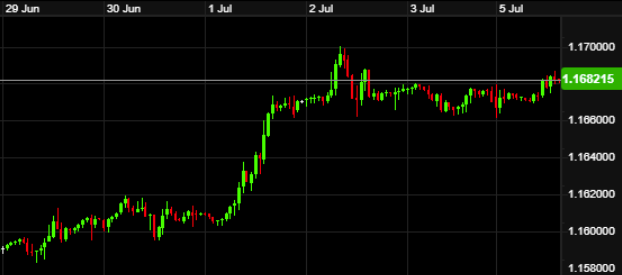
The US Dollar saw further falls last week, as a slowdown in June’s jobs growth led to a softening Fed rhetoric. In the UK, political risk eased slightly following a speech from Andy Burnham, whilst on the continent inflation slowed to 2.8%. Sterling-Euro rose slightly to a 12-month high as a result.
This week brings us the respective minutes from June’s Federal Reserve and ECB meetings. The Bank of England Governor, Andrew Bailey, speaks on Tuesday following the latest Financial Stability Report.
Despite the recent political uncertainty in the UK, the path to a new Prime Minister took another step forwards last week, reassuring financial markets accordingly. Sterling-Euro pushed up to a one-year high, whilst GBP-USD also saw gains.
Currency markets waited eagerly for the likely incoming PM Andy Burnham’s speech last Monday. This was his first to contain any major economic substance since he emerged as the only real candidate for the Labour leadership. The former Manchester mayor pledged that he would stick to the existing fiscal rules, as well as his party’s manifesto tax constraints.
Such a step was enough of a commitment to reduce investor anxiety in relation to government borrowing and calmed the UK gilt market too. His other pledges involved free bus travel for 16–18-year-olds, as well as setting up “Number 10 North” in Manchester to rebalance power across the country.
The optimism took sterling to a high last seen against the Euro in June 2025. This was despite Bloomberg reporters feeling the speech was “vibes-heavy and details-light”.
Also assisting the currency was the Bank of England’s outlook remaining supportive. Following weak services data recently and the continued Middle East uncertainty, the Bank of England has held firm in their policy stance. Markets still price in a higher probability of an interest rate hike this year rather than a cut. This is directly linked to spiking inflation in the struggling services sector, as well as headline inflation. The possibility of a rate hike is keeping GBP above the water line for now.
Recent peace developments in the Middle East have also boosted GBP on a wider level. Lower global energy prices have helped reduce the worries about UK’s requirements for imported energy. This is the inverse to what we saw a few months ago where investors were betting against the Pound.
There were also appearances from Bank of England policymakers last week. The ever-hawkish Catherine Mann suggested an “activist move” of raising UK rates may be required if public inflation expectations and wage growth move upwards. This continued to reassure markets that the BoE are far from cutting rates.
Huw Pill spoke in Uzbekistan and whilst the speech was about the impacts of Brexit, he still suggested that long-term trade barriers from exiting the EU were pushing inflation up. Pill also defended his recent votes for a rate hike, warning his fellow BoE policymakers to not become “complacent about the cost of living”.
The Chief Economist has concerns too that the Bank’s change to multiple economic scenario forecasts is making it more difficult for policymakers to reach a joint decision. He suggests this makes the panel look more divided than they are.
Last week’s GBP-USD chart can be seen below:
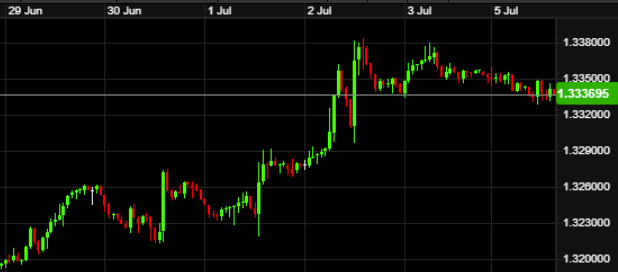
America 250 led to a shorter week last week, as the nation’s 4th July celebrations went into a Trump-fueled overdrive. Despite all the fireworks and speeches, the currency itself had a less than explosive week.
The June jobs data from the US was lacklustre as only 57,000 jobs were added to the economy for the month, according to the latest Non-Farm Payrolls figures. This was approximately half of what markets had forecast when the data was published on Thursday lunchtime and lower than all but one Bloomberg economist had predicted.
The limited growth alongside the downward revision of recent months, suggested there is now a cooling trend in the US employment market. The headline unemployment rate did move down slightly, but this was more due to the fact that overall labor participation plunged rather than people finding jobs.
The weaker jobs data led to financial markets rapidly dialing back their expectations of short-term US interest rate hikes. This once again creates concerns around the topic of stagflation, with the potential for a sluggish economy and high inflation.
News headlines were slightly embarrassing for Trump, in a week where he spent a lot of time speaking of how much he had done for the country. Unfortunately, it was also the week when his own financial disclosure figures were released for 2025. The President made 21,000 securities trades, many of which were shortly after market events he created himself and in Government-linked companies….
Further drops in oil prices also weakened the Dollar slightly. This unwinds what we have seen in recent months, where safe haven demand for the USD soared. Overall last week, the Dollar Index saw its biggest weekly drop since April.
In the Eurozone, initial inflation figures for June suggested a sharp cooling in the metric. The data showed a fall back to 2.8% for the month, down from the 3.2% seen in May and the 3.0% expected. This follows the ECB’s rate hike last month.
The figure brings both good news and bad. Good in the respect that in brings inflation back towards the ECB’s 2% target, but bad in terms of reducing attractiveness for investors looking for interest yield ongoing. Core inflation also cooled to 2.4%, which too was unexpected.
The data also led to slashed expectations of a further interest rate hike to come in the July ECB meeting, which weakened the currency, hence the year high on GBP-EUR. The inflation picture also weakened the Euro against other major currencies.
Falls in oil and energy prices had a negative impact on the single currency though. Energy drops are good news domestically, but as above they saw the Euro weaken due to a lower likelihood of rate hikes. One small positive was that economic indicators in the form of PMI numbers saw some stability in June, especially in the Services sector.
The small move up to a 12-month high on GBP-EUR can be seen in the chart below:
The week ahead:
Monday – EU Retail Sales (10:00), US Services PMI (15:00)
Tuesday – BoE Financial Stability Report (10:30), BoE Bailey speech (11:30)
Wednesday – RBA rate announcement (03:00), Fed Meeting Minutes (19:00)
Thursday – ECB Meeting Minutes (12:30), US Unemployment Claims (13:30)
Friday – German CPI Inflation (07:00), French CPI Inflation (07:45)
Into a slightly quieter week we go, with market data a little thinner on the ground. We have seen a small rise in Sterling-Mexican Peso after last night’s football result…….. I jest; it hasn’t moved an inch.
The main events of this week will be the disclosure of the minutes from two recent central bank meetings. Wednesday evening will give us the opportunity to look into the discussions of the Federal Reserve meeting on 17th June. This was Kevin Warsh’s first meeting at the helm and given the evident changes thus far, the minutes will be of special importance. These are published at 19:00 UK time.
Thursday brings the equivalent release from the 11th June ECB meeting. This saw the panel raise interest rates by 0.25% to tackle rising inflation stemming from events in the Middle East. Solidified peace talks and a June inflation slowdown since then have changed the picture slightly, but the document will contain useful insight nevertheless.
UK events are limited, with Andrew Bailey’s Wednesday appearance the only major one. This takes place at the Bank of England, just six days prior to his annual Mansion House address on Tuesday 14th July.
Despite market events being limited, politics and geopolitics will continue to influence foreign exchange rates. The ongoing discussions in the Middle East, as well as developments relating to Andy Burnham’s leadership, will be of most importance.
If you have concerns that such events may impact your currency requirements, then reach out to the Aston team for more information on how to protect yourself.
Have a great week.
