
ACM Update 28-09-26
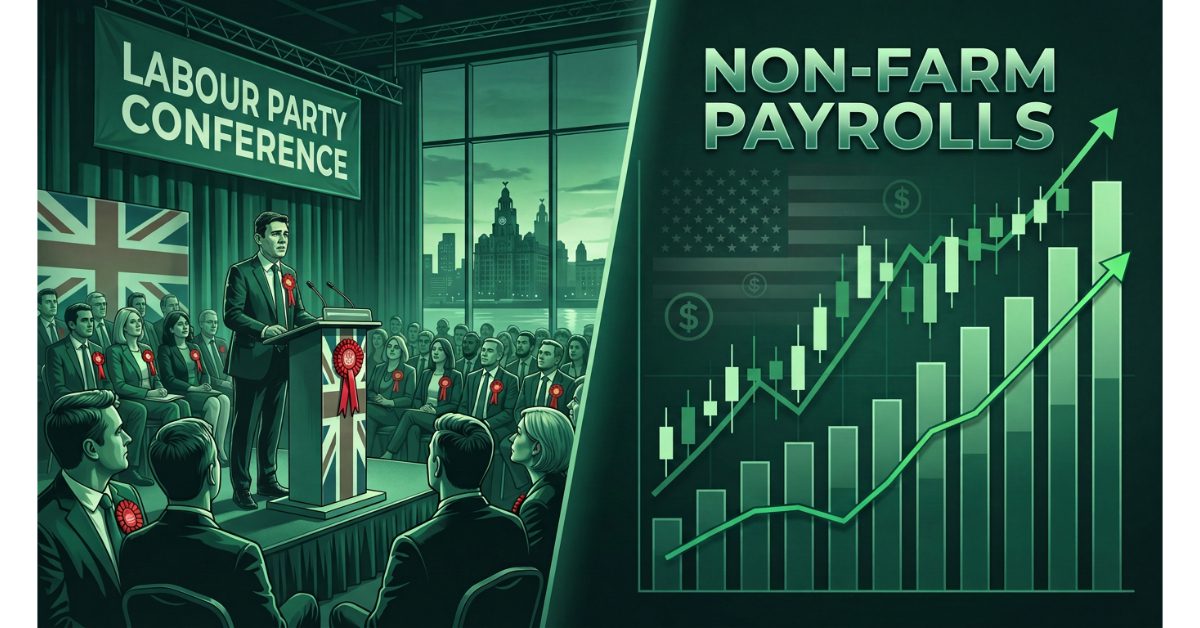
With a hawkish Federal Reserve behind it, the Dollar saw further gains last week pushing GBP-USD to a low dating back almost three months. Elsewhere, world leaders took a trip to the US for the United Nations General Assembly.
Q3 ends and Q4 begins with a flurry of speeches from policymakers from the European Central Bank, Federal Reserve and Bank of England. Will their comments shape the ongoing trajectory of their respective currencies? Non-Farm Payrolls for September are published on Friday lunchtime.
Strong data and a hawkish central bank helped boost the Dollar further last week. The US currency has now gained 2.5% versus the British Pound in a little over two weeks, with 2% of that coming in the five trading days following the last Fed meeting.
Indeed, that meeting remains a strong force behind the currency. The widely expected 0.25% rate hike and a series of hawkish statements from policymakers, have provided support. These have reinforced and ultimately increased expectations that further policy tightening is in the pipeline for the remainder of the year.
Markets were predicting the chances of an October US rate hike at barely 50% ten days ago, with that figure now sitting at around 70%. The Fed’s “higher for longer” mantra looks to be back with a vengeance.
Energy driven inflation remains a concern globally, but the expected impact of that domestically in the US is also a Dollar-driver. Oil prices have hovered around $100 a barrel all week, leading to worries of America being impacted more heavily than most. This in turn saw a bond market selloff, where the US 10-year Treasury yield hit 5.14%, its highest level since July 2007.
US data was also looking good and helping the Dollar make gains. The resilience of the economy was evident as the US Composite PMI data was pushed along by strong new orders, hitting 58.4 and its highest level since mid-2021.
Weekly jobless claims were also trending nicely downwards. This led to nervousness around persistent wage inflation and also increases the chances of an upside surprise on this Friday’s Non-Farm Payrolls print. The above all gives freedom for another Fed rate hike due to a resilient economy, which equalled more Dollar strength.
Geopolitically, with things seeming slightly calmer in the Middle East between the US & Iran, the US-China meeting at the White House was a focal point. Coming off the back of the UN General Assembly in New York, the leaders of both countries met at the White House. Separately, Treasury Secretary Scott Bessent had just announced an extension to the trade war truce between both nations until 10th January.
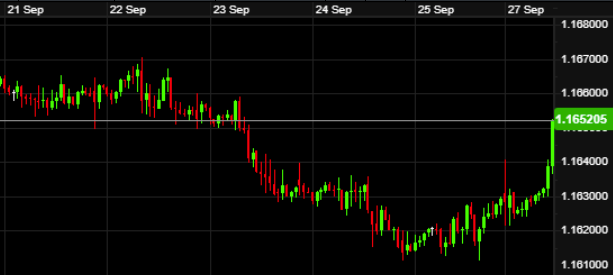
All in all, a very strong week for the Dollar which achieved its biggest weekly gain against the British Pound since mid-May. Movements on that pair can be seen in the chart below:

In the UK, the British currency has also felt the impact of recent action from the Federal Reserve, combined with inaction from the Bank of England. The interest rate differential between the two currencies is now such that for the first time this year, a Dollar deposit yields more than a GBP deposit. As a result, global capital is now flowing out of the Pound and into the greenback.
Weaker business activity for September wasn’t helpful either, when the S&P Global Flash PMI figures were released midweek. Whilst Manufacturing figures improved, the far larger Services sector slowed to a reading of 51.7, down from 52.5 in August. There is concern that higher borrowing costs are already harming economic growth in Britain.
Recent market data has also led to “fiscal anxiety” ahead of October’s Budget. Public sector debt continues to expand, hitting £18.27 billion in August. This exceeded the forecast figure by almost £3bn with markets already nervous about new PM Andy Burnham’s unbacked spending habit.
GBP is therefore viewed as “risky” as we move towards the Budget. This was further illustrated by the OECD (Organisation of Economic Co-operation & Development) downgrading the UK growth forecast for 2027 to 1.0%. This year was upwardly revised to 1.1% though, from 0.9% at the last publication, citing a resilient economy. The body did warn in relation to ballooning debt costs however. All eyes are on Mr Healey…..
A sluggish economy and stubborn inflation has naturally led to the word “stagflation” doing the rounds once more. As the Middle East conflict drags on impacting UK supply costs, inflation remains a problem. Unlike the US, there remains concern that a UK rate hike may have a detrimental impact on the economy.
A trio of Bank of England policymaker speeches showed a hawkish lean coming from policymakers who voted to hold rates last time out. Governor Bailey stated the panel “can’t afford to wait” for definitive proof of a hike being needed, whilst Sarah Breeden stated a rate increase is becoming “increasingly appropriate”. Clare Lombardelli meanwhile is “close to voting for a hike”.
The 6-3 split in favour of a hold just ten days ago could therefore be inverted by the time of the next meeting on 5th November. Markets are currently pricing in a hike in that meeting at 80%, followed by a further three hikes in the next 12 months.
The Euro has also faced headwinds due to US rate hikes. With the Dollar Index continuing to spike, EUR-USD moved down to a two-month low and was in fact a fraction off a 16-month low also. The expanded yield differential between the two currencies saw investor flows from the Euro into the greenback accordingly.
Eurozone economic data remains mixed with inflation rising again of late as with other nations. However, the bloc’s reliance on imported energy combined with low levels of growth have been continuing to hold the currency back.
Recent comments from ECB President Christine Lagarde have kept the committee open to further rate hikes, but the questions remain about how much they can actually do. Higher borrowing costs are already weighing heavily on Eurozone economic activity, which is not a problem the US is facing. This puts the single currency on the back foot.
Despite a number of ECB policymaker speeches last week from Lagarde, Bundesbank President Joachim Nagel, Isabel Schnabel and Martin Kocher, there was little to drive the Euro. The central bank is currently viewed as cautious rather than the hawkish narratives emanating from across the English Channel and the Atlantic.
The Euro saw slight gains against GBP, mainly due to pre-Budget nervousness and the British currency falling out of favour against the Dollar. Movements on Sterling-Euro can be seen in the chart below:
The week ahead:
Monday – BoE Ramsden speech (11:00), Fed Bowman speech (13:15), ECB Lagarde speech (14:30)
Tuesday – RB Australia rate announcement (05:30), ECB Nagel speech (11:00), ECB Lagarde speech (12:00), US JOLTS Job Openings (15:00), BoE Mann (16:00) Fed Bowman (16:00) BoE Taylor (16:30) Fed Waller (20:00) speeches
Wednesday – US Final GDP & Core PCE inflation (13:30), Fed Barkin speech (18:30)
Thursday – BoE Bailey speech (09:00), BoE Mann speech (13:00), US Unemployment Claims (13:30), ECB Lagarde speech (14:30),
Friday – EU Flash CPI inflation (10:00), US Unemployment & Non-Farm Payrolls (13:30)
We have a busy week of speeches ahead both from central banks and UK politicians. The latter is mainly covered by the annual Labour Party Conference, which is currently taking place in Liverpool. Monday and Tuesday will be of most significance, with speeches from the Chancellor and Prime Minister.
With John Healey’s financial juggling in the spotlight ahead of the looming October Budget, markets will be paying particular attention to his words. Andy Burnham takes to the stage on Tuesday, for the main event.
Economic events for most of the week are also speech heavy. Across the Bank of England, Federal Reserve and European Central Bank, there are more than 25 significant speeches from policymakers to digest. Andrew Bailey and Christine Lagarde both hold events, where any inclination of a new policy stance could cause market movement.
In data, the US has the majority this week. Wednesday’s Final GDP for Q2 should confirm that the US economy achieved 1.5% (annualised) worth of growth in Q2, whilst Core PCE inflation is released at the same time. The Fed’s chosen inflation too could give an early indication of another rate hike to come in November.
Friday contains the latest jobs data from the US. Non-Farm Payrolls for September are forecast at circa 100,000 new jobs added. Last month’s impressive 162,000 was well above estimate and gave the Fed the freedom to move for a rate hike without risking strangling the economy.
Markets remain volatile, especially with the recent Dollar movement. For any pending currency conversions, reach out to the Aston team for assistance.
Have a great week.
