
ACM Update 16-11-26
Hotter than expected US CPI saw the Dollar make gains last week, as Fed rate hike speculation grew once again. A Bank of England December rate rise is also very much on the cards, even more so following strong Q3 growth figures.
The coming days will bring the latest on UK inflation, the minutes from October’s Fed meeting and speeches from each of the three big central bank heads – Kevin Warsh, Andrew Bailey & Christine Lagarde.
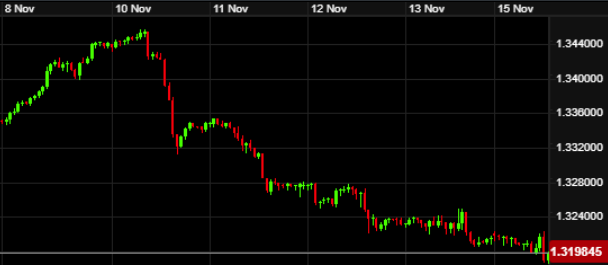
Another volatile week with Dollar movement the primary driver. The US currency was over 2% to the good versus GBP in the space of ten days, as of close of business on Friday. Data releases last week all pointed towards more policy movement in early December.
October’s US CPI inflation figures were released on Tuesday and came in above market expectations. The headline figure rose by 0.4% month-on-month. The annualised however figure was not published, as the infamous US Government shutdown of last year prevented comparable data collection for October 2025.
Housing and food costs were the main drivers of price increases for the month, as well as a continued slight increase in energy prices. Fuel (gas) price increases “slowed” to 1.0% from September’s 9.2% monthly surge.
The figure is the last CPI reading before the 9th December Fed decision. As a result, it all but cements a rate hike to come from the committee. Markets have now turned to a case of “how much” rather than “if” the hike comes.
Prior to the data, Fed Governor Christopher Waller has commented that a Core CPI reading of 0.3% or higher (the reading was 0.3%) would put a larger 50-basis point rate hike on the table. Financial markets don’t yet agree with that sentiment however, pricing a half-point move at just a 14% chance.
After the Nvidia news headlines and CEO resignation earlier in the week saw share prices fall, the Dollar was also a beneficiary. Safe haven flows into the currency were exacerbated by further nerves around US technology firms during the week. The less said about Friday’s Microsoft situation, the better…
Other publications included Weekly Unemployment Claims, which crossed 200,000 new claimants for the first time in nine weeks. It seems unlikely that the economy is showing cause for concern, however recent price rises will inevitably have had a knock-on effect on hiring. PPI inflation measuring producer prices came in marginally under projections at 0.3%, slowing considerably compared to last month’s (upwardly revised) 1.4%.
Overall, the data pointed towards a rate hike thus Dollar strength ensued. Movements on GBP-USD last week can be seen in the chart below:
Whilst GBP lost ground to the resurgent Dollar, the British currency was offered support against other majors from strong growth figures for Q3. September’s numbers saw growth of 0.2% for the month, beating expectations of a flatline. This meant that the third quarter recorded 0.7% worth of expansion overall and the fastest growth rate for more than two years.
Chancellor Healey was happy with his work, declaring the figures as the “economy growing at the fastest rate in nearly a decade, aside from the pandemic”. A nice bit of artistic licence, but that shouldn’t detract from a strong performance.
Much of the increased demand was attributed to spikes in AI-related sectors, which has been the biggest driver of UK growth across 2026. Despite the services sector doing well, both industrial production and manufacturing shrank in Q3 by 0.1% and 0.7% respectively. Overall, the GDP performance puts the UK a very close second to the US in economic growth within the G7 economies.
Strong growth and inflation remaining elevated have both fuelled expectations for another UK rate hike come December 17th. Hawkish comments from the Bank of England’s Deputy Governor, Clare Lombardelli, furthered this mindset. She stated that conditions for persistent inflation were “crystallising” in a speech on Tuesday.
With geopolitics in the Middle East remaining fragile, concerns surrounding further inflation problems in the UK persist. As a result, market estimates are currently as high as an 82% chance of the Bank of England going back-to-back with another quarter-point hike next month.
As often, what is good for the Dollar is bad for the Euro, which was evident last week. The single currency lost a full 2% during the week, despite a hawkish ECB outlook.
Comments from President Lagarde as well as other central bank heads from Germany and Italy, all suggested that a December rate hike from the bank is increasingly likely. This saw an early week move for markets to fully price in another quarter-point hike from Frankfurt on December 17th.
That thought pattern was further strengthened by confirmation of stubborn inflation figures for the continent. Eurozone inflation reached an annualised 4.0% in October as energy costs surged once more. This marked the highest CPI reading in three years. Individual inflation readings on Friday showed Spanish inflation for example was up at 4.9%.
The high inflation brought back concerns over the flatlining growth on the continent. Q3 demonstrated at least a modest growth of 0.4%, aiding calls for a rate hike. However there remains widespread concern that sustained higher rates will suffocate what little economic growth there is.
Political instability is also a major talking point. French budget concerns remain a drag for the single currency, as well as the recent unrest in major cities. Spain is also running towards an election on 29th November and saw the first general strike in 14 years on Wednesday, causing widespread disruption.
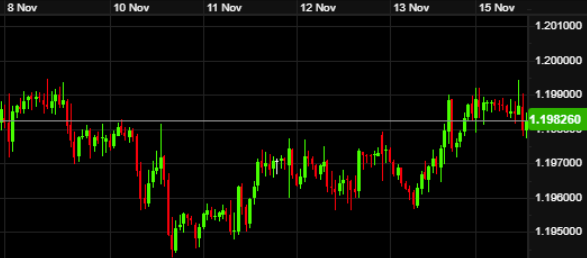
Sterling-Euro remained reasonably flat again across the week, with just half a cent’s worth of movement:
The week ahead:
Monday – Fed Warsh speech (17:00), RBA Bullock speech (22:50)
Tuesday – UK Unemployment & Average Earnings (07:00), EU ZEW Economic Sentiment (10:00), US Retail Sales (13:30)
Wednesday – UK CPI Inflation (07:00), BoE Bailey speech (07:30), ECB Financial Stability Review (09:00), BoE Bailey speech (15:00), Fed Meeting Minutes (19:00)
Thursday – BoE Dhingra speech (12:15), ECB Lagarde speech (13:30), US Unemployment Claims (13:30)
Friday – UK Retail Sales & Government Borrowing (07:00), ECB Lagarde speech (08:15), US UoM Consumer Sentiment & Inflation (15:00)
Given recent data, all three of the big central banks look likely to round out 2026 with an interest rate hike. Their final meetings are spread across just over a week in mid-December. This week, the heads of each of those institutions have public appearances where hints towards policy changes will be awaited. Fed Chair Kevin Warsh appears on Monday, Andrew Bailey speaks twice on Wednesday, whilst Christine Lagarde is in the spotlight on both Thursday and Friday.
Other major events come from the UK across the week. The latest on Unemployment, CPI Inflation and Retail Sales arrive on different days. The CPI data is expected to show a further rise to 3.6% for October, from 3.5% in September. This or higher will cement the case for a December rate hike.
With a strong Dollar last week and further Iranian attacks on US air bases in the Middle East over the weekend, the USD is likely to remain strong for now as a safe haven. GBP movement will largely be driven by this week’s data. The Euro meanwhile will likely have to depend on Lagarde’s comments for direction.
For assistance on any upcoming foreign exchange transfers, get in touch with the Aston team via the usual channels.
Have a great week.
