
ACM Update 13-04-26
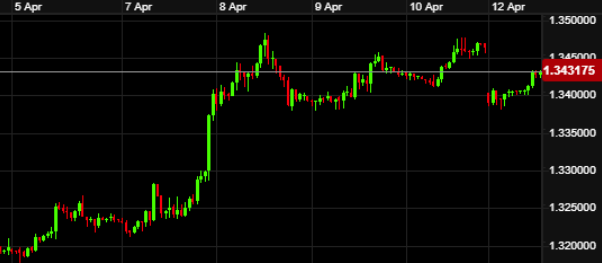
The US Dollar continues to yo-yo back and forth, based on events in the Middle East. With major shifts in oil prices and inflation expectations after last week’s temporary ceasefire, the Dollar weakened as GBP-USD hit a six-week high.
This week brings us the February GDP figures from the UK, as well as plenty of narrative from central bank heads during the International Monetary Fund’s spring meetings in Washington DC. US-Iran talks will remain pivotal.
The Dollar remains very much driven by the situation with Iran, with market data playing second fiddle. A surprise ceasefire agreement early last week saw the currency (as well as oil prices) weaken off considerably. The greenback fell to its lowest against both GBP and the Euro since the days just before the conflict began in late February.
The question now becomes whether the agreement will hold, as that will dictate the fortunes of the Dollar this week and beyond. For last week at least, the safe haven appetite for the Dollar was reduced as attempts to end the conflict emerged. US treasury yields also fell back, putting further downward pressure on the currency.
Rising energy prices in the US because of the conflict have seen a sharp increase in inflation forecasts. Early April forecasts were as high as 3.4%. This led financial markets to once again revise rate cut expectations for this year, looking instead towards hikes.
But it isn’t quite as straightforward as higher inflation = higher interest rates for the Federal Reserve. Softening US economic data means higher interest rates may well strangle an already sluggish economy into a stall. Thus, the committee have a fine balancing act to consider as a result of their President’s conflict in Iran.
Q4 of 2025 has seen further downward revisions to GDP output, now at 0.7% for the period. This is considerably down on the prior quarters and can only in part be attributed to the Government shutdown. More recently, slowing growth indicators for the month of March have demonstrated an air of caution across the country.
This was also demonstrated in the March employment data, released on Good Friday when European markets were closed. Whilst overall unemployment dropped from 4.4% to 4.3%, this was largely attributed to a 369,000 decline in the labor force, rather than any real job creation.
The Non-Farm Payrolls data however did show resilience in bouncing back in March. After the February data was heavily revised down to show 133,000 jobs lost, March showed a surprise increase of 178,000 jobs. Markets had expected circa 60,000 as a gain. The Federal workforce continues a six-month contraction trend under Trump.
All in all, there are plenty of variables for the Federal Reserve to consider when they meet next on 29th April. The data at their disposal, including all the latest economic data for March, will be released this Wednesday evening in the form of the Beige Book publication.
Aside from this, we can expect the Dollar to remain heavily driven by what goes on with events in the Middle East, as US-Iran talks continue this week.
The upward movement on GBP-USD last week can be seen below:
GBP meanwhile benefitted from a slight relief rally off the back of the ceasefire agreement. This saw the British currency gaining ground over the Easter period, up by a full two per cent against the Dollar, but relatively flat versus the Euro. A drop in oil prices also helped shorter-term inflation strangling the domestic economy to a stall.
However, markets are still bullish and predicting two quarter-point interest hikes from the Bank of England in 2026. These are geared around a widely expected spike in inflation, due to energy & fuel price rises since the start of the conflict.
This recent shift in interest rate expectations has been supporting GBP, however not everyone thinks rate hikes in the UK are guaranteed this year. Bank of England Governor Andrew Bailey deliberately pushed back against these market bets, suggesting that traders are “getting ahead of themselves”. Sterling has seen volatility as a result, with market expectations battling Bank of England suggestions, in driving the currency.
Domestic data meanwhile shows a fragile picture for the UK economy. The latest Services PMI data (making up around 80% of the economy) was revised down to an 11-month low of 50.5 whilst January’s GDP release showed zero growth. Unemployment continues to tick higher, whilst labour costs have also been impacted by the recent April minimum wage rise.
All this comes amidst the UK’s fiscal outlook deteriorating. The fiscal deficit forecast was revised upwards to 4.7% of GDP recently, due to rising energy price mitigation costs, as well as higher borrowing figures. Again, this is largely attributable to events in the Middle East.
Despite April historically being a good month for the currency, the current geopolitical position is likely to overshadow this. The next Bank of England meeting takes place on 30th April.
Last week’s ceasefire agreement also saw relief and a relief rally for European markets. With the continent vulnerable to energy price swings, the calming in the Middle East saw the Euro gain ground versus the Dollar, up to a six-week high at one point. Supply chain concerns remain though, linked to the longer-term solution regarding the Strait of Hormuz shipping route.
Inflation is definitely back in Europe, as demonstrated by the latest figures. An almost perfect 1.9% in February, jumped in one month to 2.5% in March. Energy prices went from a -3.1% drop in February, to a 4.9% spike in March, exacerbating overall inflation.
As a result, the European Central Bank has been forced to upwardly revise inflation forecasts for 2026 to 2.6%, again largely based on energy price shocks. Markets have been revising forecasts too, now pricing in up to three rate hikes from Frankfurt during the remainder of this year. As mentioned previously, this is a sharp departure from wide expectations of no change in policy all year.
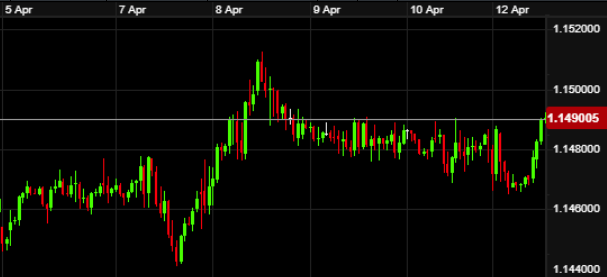
Despite large gains last week against the Dollar, the Euro traded broadly flat again versus GBP. Movements on the latter can be seen below:
The week ahead:
Monday – IMF Meetings (all week)
Tuesday – BoE Mann speech (09:50), US PPI (13:30), BoE Greene speech (15:00), BoE Bailey speech (17:05), ECB Lagarde speech (22:00)
Wednesday – BoE Bailey speech (19:50 & 19:00), Fed Beige Book (19:00), ECB Lagarde speech (20:30)
Thursday – UK GDP (07:00), ECB Final CPI (10:00), ECB Meeting Minutes (12:30), BoE Taylor speech (16:40 & 20:00)
Friday – Fed Waller speech (19:00)
The main feature of this week will be the IMF (International Monetary Fund) spring meetings. These take place in Washington DC and will feature speeches from IMF heads and economists. Most significantly in this phase of central bank policy uncertainty, many key speakers will come from monetary policy rate-setters themselves.
Andrew Bailey, Jerome Powell and Christine Lagarde all speak on more than one occasion, as well as other significant members of both the Bank of England, Federal Reserve and European Central Bank. This year’s theme is “building prosperity through policy” but will likely be dominated by events in the Middle East.
Whilst monetary policy remains as uncertain as the geopolitical climate by which it is dominated, any useful direction from the central bank heads will be keenly digested by markets. Given the time difference between Washington and Asian markets, we can expect plenty of movement from the comments at all times of day.
Outside of this, the major data points are one each from the UK, Europe & US. In the UK, the February GDP reading for the UK is published on Thursday morning. This is expected to show a barely positive 0.1% growth for the month, as a follow on to the flat lining of January.
In Europe, the Final CPI release for March is expected to confirm the aforementioned spike to 2.5% inflation in January. In the US, the Beige Book release will give the latest economic data which the Federal Reserve will use two weeks later for their decision. Perhaps more importantly, this will give financial markets some early clues as to the immediate knock-on effects in March of the war in Iran.
As the Middle East conflict goes back and forth, the Dollar will continue to be driven by these events. For this reason we are expecting the recent volatility to continue on Dollar-based currency pairs, making direction unpredictable.
To remove risk from any outstanding exposures, make sure to reach out to the Aston team and we can work on the right solution for you. Please get in touch via the usual channels.
Have a great week.
