
ACM Update 03-08-26

A pair of hawkish holds emerged from the Federal Reserve & Bank of England meetings last Wednesday & Thursday. Sterling benefitted the most, gaining two cents versus the US Dollar. Geopolitical events in the Middle East saw oil prices fluctuate around 10% in the week.
With the usual summer lull beginning this week, market events are thinner on the ground. Being the start of a new month, we do have the publication of July’s US employment figures. These culminate in Non-Farm Payrolls on Friday.
Kevin Warsh’s second meeting in charge of the Federal Reserve was much like his first, delivering no change to interest rates. But it was the hawkish narrative and internal division within the committee that made headlines.
Recent Dollar data had all pointed towards a hold in rates being a highly likely outcome, but that did not stop markets hoping for a Dollar-strengthening hike. But the recent cooling of US CPI data to 3.5% was deemed enough to keep interest rates where they were for the fifth consecutive meeting. At least, for most Fed decisionmakers.
A rare three votes went the way of an immediate rake hike, displaying dissent within the panel. These sought to take the headline interest rate to 4.00% straight away, referencing persistent inflation linked to the Iran war.
Chair Warsh was not one of these, but he equally did not signal the likelihood of any cuts in his once again heavily redacted statement. This pushed the current “higher for longer” Fed stance further into the year, as expectations cooled further for any changes in the September meeting. Given the minority of traders betting on a July hike, the Dollar weakened off considerably from Wednesday evening onwards, striking an almost three-week low by Friday’s close.
Another reason for the Dollar weakness came on Thursday lunchtime, courtesy of the US Advance GDP figures for Q2. These showed a further deceleration in the growth rate to an annualised 1.5% in the period, with the slowdown easily attributable to the Iran war. Core PCE inflation data also showed a slowing which leads to even less likelihood of a rate hike being required in the coming months.
Geopolitics were also at play, as the brief US-Iran truce was ended by a surprise missile attack on a US base in Jordan. This did initially create some safe haven demand to support the Dollar, but a potential truce over the weekend ahead of a deal to be agreed “rapidly” as per Trump, cooled the Dollar. Oil prices yo-yoed amidst the tensions but fell back slightly later in the week.
Dollar activity was also influenced by coordinated intervention on the Japanese Yen on Thursday and Friday. The Bank of Japan launched massive Yen-buying operations which were supported by the US, leading to some Dollar weakness.
Further cause for US concern came in the latest Durable Goods Orders figures for June. These were projected to show a monthly rise of 1.6% but resulted in a mere 0.3% recorded. Tariffs and geopolitics remain heavily influential here. In better news, US unemployment claims remained close to historic lows again last week at 197,000 new claims.
The rise in GBP-USD can be seen in the chart below:
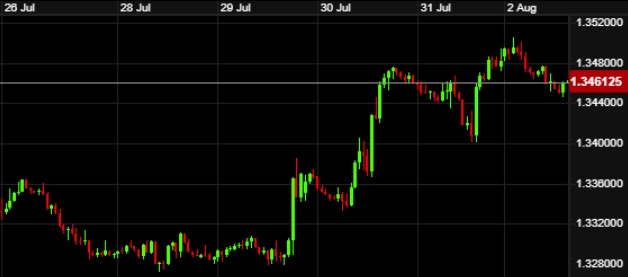
The Bank of England also delivered a hawkish hold of policy last week, with the Pound enjoying a strong few days as a result. The BoE committee members were once again divided in their outlook, with a 6-3 split rather than the 7-2 forecast.
Recent hike voters Megan Greene and Huw Pill were rejoined by the ever-hawkish Catherine Mann in looking for an immediate hike to 4.00%. However, the majority from the rest of the panel was enough to keep UK rates where they are until after the summer.
The split does demonstrate an emerging rift in the committee though. Six of the panel, including Governor Andrew Bailey and Deputy Governor Sarah Breeden, are comfortable that the wait and see approach remains the best cause of action. The three dissenters have concerns in relation to the US-Iran conflict causing volatility in energy markets, as well as rising oil prices. They believe a preemptive hike is needed to avoid any second-round inflationary effects.
Despite the above push for higher rates, Andrew Bailey used his post-announcement press conference to calm market expectations. The BoE Governor noted the committee is not “edging” towards a tightening cycle of higher interest rates and believes wage and inflation indicators remain under control for now.
Bailey’s comments were seen as talking down the hawkish vote split and took the edge off any GBP rally. The next BoE meeting takes place on 17th September with markets currently pricing in a 60-75% chance of another hold.
The further escalation in the Middle East did go slightly against Bailey’s narrative though. The BoE opted to raise their inflation forecast to 3.2% for later in the year, a move which supported GBP upward movement given the possible need for hikes.
New Chancellor John Healey stepped in to announce his autumn budget date in the Commons of 28th October. He and his new boss Andy Burnham have both maintained an explicit commitment to adhere to strict borrowing rules, a move which has reassured markets and also offered the British currency some stability.
The Euro meanwhile was on the receiving end of the hawkish narrative of the other central banks. This meant the single currency was on the weaker side against the Pound and US Dollar in the second half of the week.
The geopolitical tensions in the Middle East didn’t help the Euro either, in light of the high imported energy exposure the continent has. Equally, there was infighting between member nations after the Spanish enclave of Ceuta saw an influx of migrants, leading to tensions and criticism from elsewhere.
Friday saw the latest European inflation data published, in the form of Flash CPI for July. This showed sticky inflation of 2.9%, marginally up from the 2.8% recorded in June. The shift was primarily driven by a 10% jump in energy price inflation.
In better news, second quarter GDP figures were better than expected with 0.4% growth doubling the estimate. The Spanish market led the growth with 0.7% for the period. On the other side of the coin, the German economy saw a rise to 6.4% unemployment in July, taking the number of those jobless to over three million.
Sterling-Euro finished broadly where it started, as shown in the chart below:

The week ahead:
Monday – EU/UK/US Manufacturing PMI (08:15-15:00), Canada Bank Holiday
Tuesday – US JOLTS Job Openings & US Factory Orders (15:00)
Wednesday – EU/UK/US Services PMI (18:15-15:00), ADP Non-Farm Employment Change (13:15)
Thursday – ECB Economic Bulletin (09:00), EU Retail Sales (10:00), US Unemployment Claims (13:30)
Friday – US Non-Farm Payrolls & Unemployment Rate (13:30)
With August typically meaning a quitter period in the FX markets, data releases are less frequent. There are no significant central bank meetings during the month, for example. What this can often mean though is that the data releases that are published can impact markets more significantly than they normally would do.
The main event of the week will be the publication of the latest round of US employment market data. These releases are spread throughout the week but the most significant is the Non-Farm Payrolls release on Friday lunchtime. The recent weekly data looks good, and a strong reading will give more confidence that the US economy remains on track despite tariffs and geopolitical headwinds.
UK news is very limited, with just the PMI Services and Manufacturing data for July making an appearance. On the continent, EU Retail Sales join the PMI releases as well as the latest economic bulletin. These will all need to be positive to give the Euro an upward week.
For those monitoring the Japanese Yen, the currency interventions of last week will be important to monitor over the coming days. These have already seen the JPY benefit to the tune of 4% in a few days, albeit recovering from multi-year lows.
As mentioned, quieter market conditions do not necessarily mean less market movement. Do get in touch with the Aston team to discuss any upcoming requirements.
Have a great week.
